Independent school · City of London
City of London School
Year 7 entry for September 2027: the Quest assessment, creative writing, practical preparation and the cost of a place.
For September 2027 entry
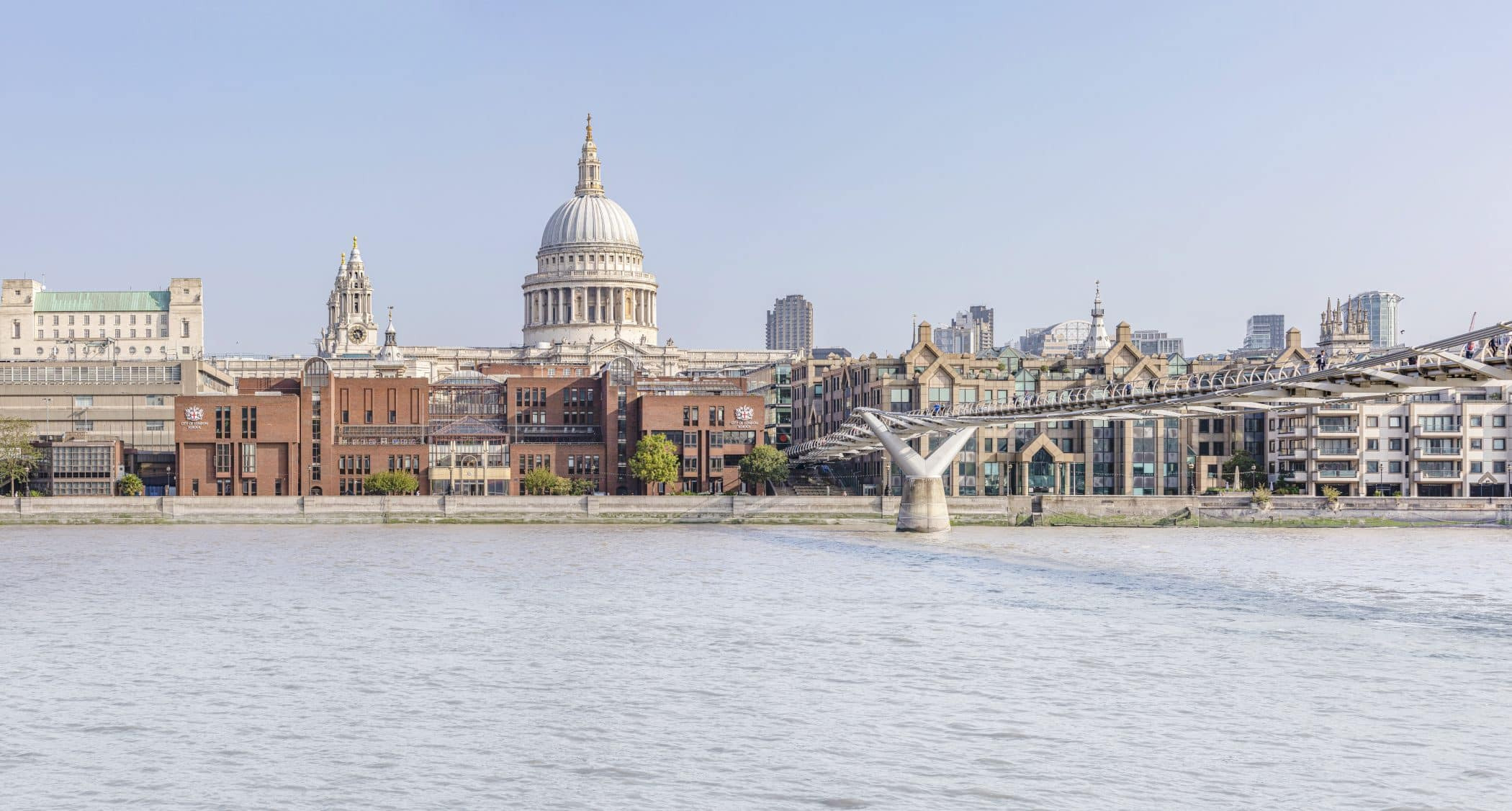
City of London School is a selective boys’ day school beside the Thames. For 2027 Year 7 entry, applicants take an online Quest assessment and a separate creative-writing task. Shortlisted pupils return for an interview and group activity; the current-school report also contributes.
At a glance
- School
- Independent · boys · day
- Entry covered
- 11+ · September 2027
- Apply by
- 2 November 2026
- Assessment
- Quest + creative writingThen interview and group activity
- Termly tuition
- £9,848.40 incl. VAT2026–27; 2027–28 fees not yet quoted
- Bursaries
- Up to full fees plus extrasApply at registration
- Location
- Thames riverfront · Blackfriars
- Inspection
- ISI · all standards metNovember 2024
Admissions contacts & visiting
- Admissions
- admissions@cityoflondonschool.org.uk
- Main school
- 020 3680 6300
- Bursary Programme Manager
- bursary.admin@cityoflondonschool.org.ukMenna El-Guindy · 020 8078 8305
- General enquiries
- enquiries@cityoflondonschool.org.uk
School address
107 Queen Victoria Street, London EC4V 3AL- Getting there
- The public entrance is on the riverfront. From Queen Victoria Street, walk down Peter’s Hill towards the Millennium Bridge, take the steps to the river and turn right. The step-free route follows the river from Blackfriars Bridge. Blackfriars is the nearest station; St Paul’s, Mansion House, Cannon Street and City Thameslink are alternatives.
- Parking
- The school links to the public Baynard House car park on Queen Victoria Street and encourages public transport. A taxi drop-off on Queen Victoria Street is at the rear of the school; allow time to walk round to reception.
Open events for September 2027 entry have already taken place. Bookings for 10+ and 11+ September 2028 open events open in spring 2027. Families applying now can contact admissions about any remaining opportunity to visit.
Inspection report
- Inspectorate
- Independent Schools Inspectorate
- Inspection
- 19–21 November 2024
- Outcome
- All standards met
Inspectors found effective teaching, constructive feedback, tailored SEND support and a cohesive pastoral system. Pupils’ views contribute to school life through the pupil parliament and tutor system. The recommended next step was consistent enforcement of corridor movement rules.
Who can apply?
- Boys born between 1 September 2015 and 31 August 2016 for September 2027 Year 7 entry, called First Form at City. Applicants should have completed Year 6.
- Register online and pay the non-refundable registration fee by 2 November 2026. Tell the current school that City will request a confidential report.
- Declare SEND and any requested access arrangements when registering, and submit relevant professional reports shortly afterwards. Some candidates may be allocated 26 November rather than 27 November.
- Select the bursary option at registration if financial support is needed. The school says this is the only stage at which interest can be declared.
- All pupils need the right to study in the UK. Brothers of pupils and relatives of alumni must meet the same registration and academic requirements; the published policy gives no preferential consideration.
Overseas applicants and access arrangements
Assessments normally take place at City, using a school laptop or desktop. By prior arrangement and at additional cost, overseas candidates may be allowed to sit under exam conditions at their current school. Contact admissions before making travel arrangements.
For specific learning difficulties, the published policy asks for a specialist assessment, ideally less than two years old, supported by the current SENCO confirming the arrangements are the child’s normal way of working. Ask admissions before commissioning a replacement for an older report.
Approved extra time is added to the on-screen timer. Creative writing is normally handwritten; typing requires an appropriate access arrangement. After admission, learning support can include individual or group teaching and study skills.
Dates & deadlines
All dates and times are UK time.
- Register for 2027
Registration closes
Standard fee £192 including VAT. Declare bursary interest and access arrangements now.
Bursary stage 1 deadline
Initial financial declaration; follow the link emailed after registration.
Entrance assessments
105-minute online assessment plus 30-minute creative writing. Some SEND candidates may attend on 26 November.
Bursary stage 2 deadline
For applicants invited to provide the detailed financial evidence.
Later stages: use the individual invitation
| Stage | Published timing |
|---|---|
| Interview and group activity | January 2027, if shortlisted |
| Offers by email | Mid-February 2027 |
| Acceptance | Early March 2027 |
The school gives periods, rather than exact days, for interviews, offers and acceptance. Use the deadline and attendance instructions in the school’s correspondence.
How to apply
Register by 2 November
Complete the online form, declare access arrangements and bursary interest, and arrange payment of the registration fee. Ask about a reduced fee before paying if eligible.
Sit both assessments at your allocated sitting
Attend the allocated sitting for Quest and the separate creative-writing task. City expects a visit of about two and a half hours, including breaks; follow the arrival and collection times in your invitation.
Return for interview if shortlisted
In January, invited candidates have an interview and group activity. City considers assessment performance, interview feedback and the current-school report together.
Review the offer and accept by its deadline
Offers are emailed in mid-February, with acceptance in early March. Read the deposit and fee terms in the offer before accepting.
Selection and competition
The published 2026 admissions policy lists up to 85 places at 11+ for September 2027. This is an approximate number of places available at this entry point, not an applicant count or offer total. Its approval field is marked “Pending approval”, so confirm the final intake with admissions.
Selection uses more than one source: assessments and the current-school report contribute to shortlisting; the later interview and group activity add evidence. A high score on an old written maths paper does not by itself establish readiness for the current online assessment.
The school says applications outnumber places, but does not publish a matched current applicant total or fixed pass mark. No reliable current applicant-to-place ratio follows from the available figures. Its reserve list is unranked; an offer depends on a vacancy and the school’s decision.
Exam format
Quest online assessment
27 November 2026
Six computer-based sections at City
- Subjects
- English, maths, verbal and non-verbal reasoning, puzzles and creative comprehension
- Time
- 105 minutes
No calculator, ruler, dictionary or thesaurus. School supplies scrap paper.
Official Quest guidanceCreative writing
Same sitting
Normally handwritten; separate prompt
- Subjects
- Creativity, vocabulary, spelling and punctuation
- Time
- 30 minutes
Write a short story in paragraphs; any narrative perspective is permitted.
English preparationInterview & group activity
January 2027, if shortlisted
At City
- Focus
- The pupil beyond the assessment results
- Time
- Interview around 15–20 minutes
City says no specific interview preparation is expected.
What to expectSection timings, navigation and materials
Part 1: 105 minutes in total
| Section | Time | How it works |
|---|---|---|
| Maths | 20 minutes | Adaptive: answer before moving on; no return to earlier questions. |
| English | 30 minutes | Fixed difficulty: move between questions and change answers. |
| Non-verbal reasoning | 10 minutes | Adaptive: no skipping or returning. |
| Verbal reasoning | 10 minutes | Adaptive: no skipping or returning. |
| Puzzles & problem solving | 15 minutes | Fixed difficulty; multi-step and logical reasoning. |
| Creative comprehension | 20 minutes | Fixed difficulty; combine information from multiple sources. |
Most questions are multiple choice; a few require one typed word or number. A visible on-screen clock shows the remaining time for each section. Scrap paper and a pen or pencil are allowed throughout. Rulers, calculators, phones, dictionaries and thesauruses are prohibited.
In adaptive sections, the next question depends on the previous response. Read carefully before committing an answer: skipping ahead and returning are unavailable. In the fixed sections, pupils can move backwards and forwards and change answers.
City of London papers
Start with City’s current Quest familiarisation and the school’s creative-writing guidance. The six maths files in the library are historical practice: one is a 13+ pre-test and another is an adaptation of a January 2002 examination.
Current 11+ familiarisation
Untimed examples · no scoreChoose “Assessments 11+ / Current Year 6”. These examples show the interface and question styles; they do not predict the live assessment.
Current creative-writing guidance
30 minutes in the assessmentA short story from a prompt, written in paragraphs. The school publishes criteria and preparation advice on its admissions page.
All papers on Elevenfold
View the collectionFirst Form maths specimen (undated)
1 hour · no calculator
Filed as 2018; the cover has no year. Historical written format, not the current Quest assessment.
Maths: January 2002 adaptation
Filed as 2017. Based on January 2002; starred questions were modified for an electronic presentation. Printed yellow answer boxes; no interactive form fields in this stored PDF.
13+ pre-test maths specimen (undated)
1 hour · no calculator
Filed as 2012 Paper 2. The cover explicitly says Specimen 13+ Pre-test Entrance Examination. Optional extension, not a current 11+ specimen.
2008 maths · Group 2
1 hour · no calculator
Cover: Monday 14 January 2008, for September 2008 entry. Historical written paper.
2006 maths · Group 2
1 hour · no calculator
For September 2006 entry. Historical written paper.
2000 maths · Group 2
1 hour · no calculator
For September 2000 entry. Historical written paper.
Read the cover: age, date and historical timing
What the library files actually contain
| Filed as | Printed evidence | Best use |
|---|---|---|
| 2018 specimen | Undated specimen to join First Form; 1 hour; no calculator. | 22-question maths skills practice. The paper is undated; “2018” is only the year it is filed under. |
| 2017 entrance paper | Based on the January 2002 Group 2 examination; starred questions modified for an electronic presentation. No overall time printed. | 19-question historical set with printed yellow answer boxes. The stored PDF has no working form fields. |
| 2012 Paper 2 | Specimen 13+ Pre-test Entrance Examination; 1 hour; undated cover. | Optional extension only; it is not a current 11+ specimen. |
| 2008 Paper 2 | Group 2; Monday 14 January 2008; September 2008 entry; 1 hour. | 26 questions, including data, algebra, geometry and number reasoning. |
| 2006 entrance paper | Group 2; September 2006 entry; 1 hour. | 18 questions, including charts, pentominoes and systematic allocation. |
| 2000 Paper 2 | Group 2; September 2000 entry; 1 hour. | 19 questions, including scale constructions, packing and grid counting. |
All six prohibit calculators. Use their printed rules only when attempting those historical papers. Their ruler, protractor and compass tasks belong to the old format; rulers are prohibited in the current assessment. Show clear working when practising so an adult can identify the method and the source of an error.
English: comprehension & creative writing
Online English tests reading and analysis alongside spelling, punctuation and grammar. Creative comprehension asks pupils to combine information from several sources in an unfamiliar context. The separate 30-minute writing task is a short story from a prompt.
Current English familiarisation: skills to practise
| Example | Useful teaching focus | Parent check |
|---|---|---|
| Darwin: The Voyage of the Beagle | Read the tortoise passage; work out vocabulary from its surrounding sentence. Q1 asks for the closest meaning of “broad”. | Can your child choose a word with the same meaning and grammatical role in that sentence? |
| Punctuation example | Locate the punctuation error in a sentence with speech interrupted by a reporting clause. | Ask which punctuation is needed at the boundary between the spoken words and the reporting clause. |
Writing: turn the school’s criteria into checks
| Criterion | What to practise | Parent check |
|---|---|---|
| Creativity | Build one manageable event, with sensory details and believable character behaviour. | Can the reader follow what changes, and why the character responds that way? |
| Vocabulary | Choose precise words and techniques that serve the scene. | Ask what a chosen word adds. Remove a grander word if its meaning does not fit. |
| Accuracy | Write in paragraphs; maintain tense and viewpoint; check sentence boundaries and punctuation. | Read one paragraph aloud, then check capitals, full stops, speech punctuation and uncertain spellings. |
A practical rehearsal is 5 minutes to plan, 20 to write and 5 to reread, adjusted to the child’s needs within the 30 minutes. This is a practice routine, not a school-prescribed split. The school warns that pre-prepared phrases and imagery are often apparent and unhelpful.
- Official Quest City familiarisation
Select Assessments 11+ and English. The Darwin passage supplies this guide’s vocabulary practice.
- Quest reading and vocabulary resources
Provider reading lists, vocabulary list and a walkthrough. The wider vocabulary list is general practice, not a predicted test list.
- Free Atom access for Pupil Premium families
Quest links to free Atom Home access once the primary school verifies eligibility.
- Atom’s City admissions guide
A commercial provider’s overview. Follow City’s own rules and dates for the live assessment.
Mathematics: skills & practice
The current maths section is a 20-minute adaptive assessment of National Curriculum arithmetic and mathematical reasoning. Use the old written papers to diagnose individual gaps, then practise the same method on a fresh question. Their topics are evidence of historical practice, not a forecast of the live test.
Place value and related calculations
Move between decimals, fractions and percentages; scale a known multiplication or division fact without recomputing it. Keep the decimal point aligned in addition and subtraction.
Check the method: Ask your child to predict whether the answer becomes larger or smaller and explain the scale factor.
Fractions and percentages of a remainder
Label the amount each fraction applies to. In a two-stage gift or spending problem, the second fraction may be of what remains, not the starting amount.
Check the method: Have your child write the balance after the first step before taking the second fraction.
Money: total cost and change
Use one money unit consistently, multiply quantities by prices, then subtract the whole bill. Check that pounds and pence have not been mixed.
Check the method: Ask for an estimate before the exact calculation, then check cost plus change equals the amount paid.
Read scales, graphs and frequency data
Identify the value of one small interval. With a frequency chart, distinguish the number of pupils from the total number of events; multiply each value by its frequency.
Check the method: Ask what the axes measure and what one bar represents before asking for a mean or probability.
Time and average speed
Convert fractional minutes and seconds consistently. For a whole journey, divide total distance by total time; simply averaging two speeds can give the wrong answer.
Check the method: Have your child label time units and calculate the time spent on each part of a journey.
Area and perimeter: use the right lengths
Subtract an overlap only once when combining rectangles. For a surrounding path, find outer area minus inner area. A triangle’s area uses a perpendicular height, not its sloping side.
Check the method: Ask your child to mark the region and the required lengths on the diagram before calculating.
Volume, surface area and packing
Separate volume from the area of the faces. Packing needs a physical arrangement with whole boxes along each edge; a volume division alone may overestimate what fits.
Check the method: Ask for a sketch showing the chosen orientation and the number of boxes along all three dimensions.
Coordinates, reflection and symmetry
Keep coordinate order consistent and use equal perpendicular distances in reflections. A rotated or reflected pentomino may be the same shape, not a new one.
Check the method: Ask the child to explain a matching pair of points or demonstrate why two arrangements count as the same shape.
Number properties and unfamiliar definitions
List candidates systematically for primes, squares, cubes, palindromes and divisibility conditions. When a question defines a new kind of number, use that definition instead of guessing from its name.
Check the method: Ask why rejected candidates fail, and how your child knows the list is complete.
Repeated events and common multiples
For bells that ring at different intervals, find the first time divisible by every interval. Multiplying all the numbers can miss the smallest answer when they share factors.
Check the method: Ask your child to verify divisibility by each interval and explain why no earlier time works.
Defined operations and equations
Translate a verbal rule into steps, preserve brackets and work inside nested operations first. Reverse a rule to find an unknown input; substitute it back to check.
Check the method: Ask for the rule in words and one independent check using the original equation.
Count systematically and justify completeness
Organise squares by size, grid routes by their last move, and allocations by a fixed first choice. Avoid counting rotated or reordered versions twice when the rules identify them as the same.
Check the method: Ask what the cases are, which cannot overlap, and how all possibilities have been covered.
Extend a pattern and test the rule
Connect a growing shape to its number of tiles. Check a proposed nth-term rule against the first few cases and distinguish a whole pattern from one row.
Check the method: Ask the child to explain the extra tiles added at each stage, then use the rule on a distant case.
Optional extension: the 13+ pre-test
The file labelled “2012 Paper 2” is a specimen 13+ pre-test. Q20–21 combine prime sums and remainder conditions; Q22 works backwards from cuboid face areas or perimeters. Use these as extension after the underlying method is secure, rather than treating them as the current 11+ syllabus.
Vocabulary: learn, recall & use
These words come from Charles Darwin’s tortoise passage in City’s current 11+ Quest English familiarisation. Read the passage first, explain each word in context and try the prompt before revealing its meaning. Tick a word after independent recall and a fresh sentence a few days later.
Your next preparation session
Choose the 11+ familiarisation
Check your child can use the answer controls, read the timer and distinguish adaptive from fixed sections.
Find the reason for one error
Separate a reading error, missing method, calculation slip and time pressure. Ask for the first step before teaching it.
Practise one maths method
Use the linked topic practice, then revisit a different question after a few days.
Explain a reading answer with evidence
Ask which words in the source support it and why another answer is weaker.
Review a short story against all three criteria
Check a clear event, precise vocabulary and accurate sentences. Improve one paragraph rather than rewriting everything.
Revisit vocabulary with meanings hidden
Ask for the meaning in context and a fresh sentence; tick only after independent recall.
Interview & group activity
Shortlisted candidates return in January. City describes an interview lasting about 15–20 minutes and a group activity; the purpose is to get to know the pupil beyond the assessment scores. The school says no specific preparation is required or expected.
At home, ordinary conversation is useful: discuss a book, explain an interest and listen to another person’s idea. In shared tasks, practise taking turns, inviting contributions and explaining a disagreement politely. These are general communication habits, not predicted interview questions.
Fees & budgeting
Published charges for 2026–27
| Charge | Amount | Basis |
|---|---|---|
| Tuition | £9,848.40 | Per term, including VAT |
| Tuition over three terms | £29,545.20 | Calculated from the published termly rate; before extras |
| Music lessons | £429.60 | Per term, including VAT |
| Standard registration | £192 | Non-refundable; including VAT |
| Reduced registration, if eligible | £64 | Including VAT; contact the bursary team before using the standard form |
| Acceptance fee | Amount in the offer / Schedule of Fees | Payable in full on accepting an 11+ place; bursary remission applies. |
These tuition and music charges are for 2026–27. September 2027 entrants should use the 2027–28 schedule when issued. Request the full quote for lunch, trips, travel and the acceptance fee; the public tuition page does not give their amounts. The policy calls the payment on accepting a place an “Acceptance Fee”.
Bursaries & financial support
Transformational bursaries can cover up to 100% of fees plus extras. Declare interest on the registration form by 2 November: the school says it cannot consider a later request if that box and the financial declaration are missed.
Eligibility: bursary support has additional conditions
| Requirement | Published guidance |
|---|---|
| Residence | Child and at least one parent/carer resident in the UK continuously for two years at application. |
| Home area | Live within the M25 at application and throughout the bursary. |
| Current school | State-maintained school, or a full/substantial bursary at an independent school. |
| Right to study | Child must have the right to live and study in the UK. |
For 11+ September 2027 applicants
| Step | Deadline or requirement |
|---|---|
| Register and request a bursary | 2 November 2026 |
| Stage 1: financial summary | 10 November 2026 |
| Stage 2: detailed evidence, if invited | 14 December 2026 |
| Possible home visit | Arranged individually; no preparation requested |
| Annual review | Financial declaration and supporting evidence each year |
Reduced registration fee, assessment and ongoing support
A reduced registration fee of £64 including VAT may be available to families with net household income of £35,000 or less who also receive Universal Credit. Contact bursary.admin@cityoflondonschool.org.uk and supply the requested evidence before paying.
The financial assessment considers income, essential expenditure, assets and liabilities. Financial assessment is independent of academic selection, and an invitation to submit stage 2 does not guarantee an award. Priority goes to families for whom the support would be most transformational.
For awards covering at least 95% of tuition, the guide includes school lunch, travel, a £500 uniform contribution on entry, public examination fees, curriculum trips in examination subjects and one further trip in each school section. These extras are tied to the level of support, not automatically included in every bursary.
Menna El-Guindy, the Bursary Programme Manager, supports families through the process and after admission. The assessment team decides eligibility; the programme manager cannot pre-approve an award.
Academic, music & sports prizes
City directs fee-remission funding towards means-tested bursaries. Academic, music and sports prizes recognise achievement; they do not reduce tuition fees.
11+ prizes
| Award | Published detail |
|---|---|
| Academic | £35 for outstanding entrance-assessment achievement; presented at Prize Day. |
| Music | £35 following audition and interview. Music Scholars receive tuition on two instruments; Exhibitioners on one. Minimum standard for piano and strings is Grade 5. Voice cannot be the first study. |
| Sport | £35 following a trial; candidates should contribute strongly to at least two major team sports, especially football. Recipients can receive development support from the Sports Prize Fund. |
Music commitment and duration
Music prizes run to the end of Year 11. Recipients are expected to contribute to ensembles, recitals and concerts, including reasonable commitments outside school hours, study Music in Year 9 and take Music GCSE. The school encourages lessons with its teachers but allows existing external tuition to continue.
Exam results
- GCSE grades 9–7
- 97%2026 · share of examination grades
- GCSE grade 9
- 60%2026 · share of examination grades
- A-level grades A*–A
- 83%2026 · share of examination grades
Grade bands and comparisons
Official 2026 results
| Qualification | Grade band | Share of grades |
|---|---|---|
| GCSE | 9 | 60% |
| GCSE | 9–8 | 85% |
| GCSE | 9–7 | 97% |
| A level | A* | 43% |
| A level | A*–A | 83% |
| A level | A*–B | 94% |
These percentages describe examination grades, not the proportion of pupils achieving that band in every subject. Compare like-for-like years and bands; results alone do not measure the progress a particular child would make.
School life & settling in
City’s riverfront site is beside the Millennium Bridge, with central London part of the school’s educational setting. On a visit, look beyond the main building: compare the daily journey, the location of games and the timing of rehearsals and clubs.
The 2024 inspection found broad academic provision, varied extracurricular activities and effective pastoral support. Pupil parliament and the tutor system give pupils ways to influence school life. Ask how a new First Form pupil finds a tutor, joins activities and gets help with work or friendships.
Other entry routes
City also offers 10+ entry and entry to the sixth form, with occasional places at other ages when vacancies arise. Each has its own assessment and timetable. The historical 13+ pre-test in the maths archive does not establish a current scheduled 13+ route.
Other schools to consider
Co-educational day school in north London. Compare the 11+ format and the journey with City’s central riverside site.
Boys’ school in south London. Compare its 11+ route, co-curricular programme and travel arrangements.
Co-educational day school in Dulwich. Compare the school’s own 11+ assessment, bursaries and south London journey.
Use the school’s individual assessment and offer instructions for attendance times, access arrangements and acceptance conditions.