Independent school · Brook Green, London
St Paul’s Girls’ School
11+ entry in September 2027: dates, eligibility, exam format, sample papers and the cost of a place.
September 2027 entry · UK time
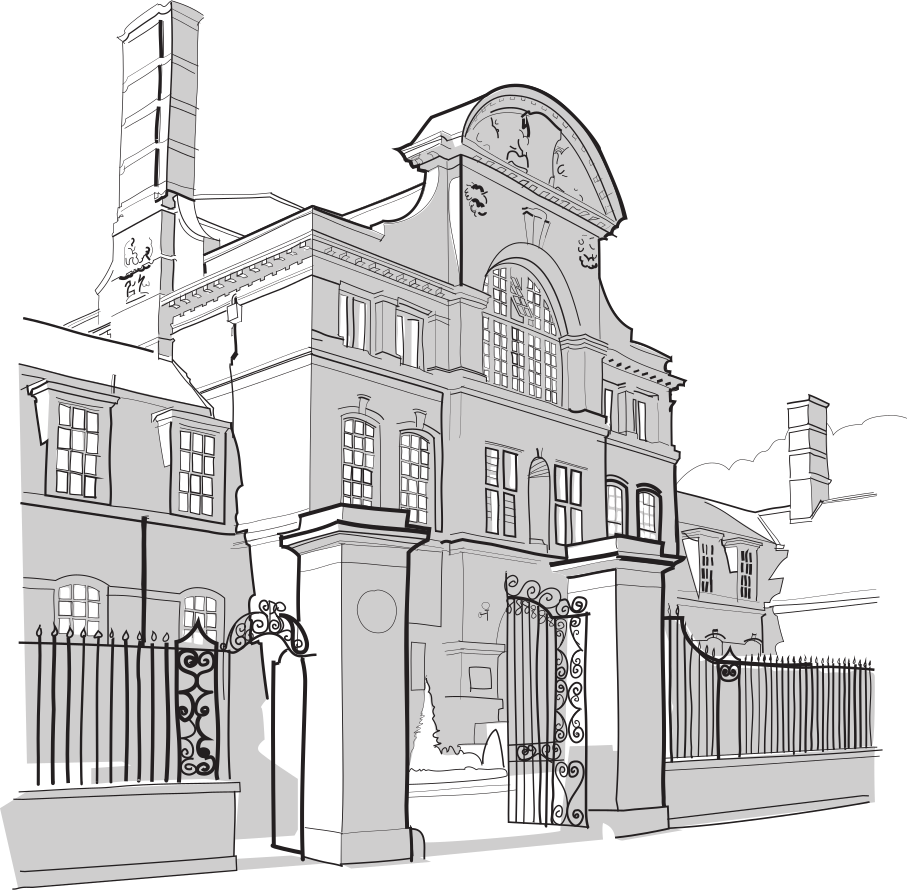
St Paul’s Girls’ is an independent day school in Brook Green, west London. This guide covers Year 7 entry in September 2027.
At a glance
- School
- Independent · girls · day
- Entry
- 11+ · Year 7
- Year 7 places
- About 120
- Assessment
- ISEB, written papers and interview
- Termly fees
- £12,854 incl. VAT · 2026–27
- Financial support
- Means-tested bursaries up to 100%
- Home-to-school journey
- 50 minutes maximum
- Inspection
- ISI · all standards met, 2024
Admissions contacts & visiting
- Admissions email
- admissions@spgs.org
- Admissions telephone
- 020 7605 4882
- School office telephone
- 020 7603 2288
- School office email
- frontoffice@spgs.org
School address
Brook Green, Hammersmith, London W6 7BS- Getting there
- For eligibility, check the normal journey for an 8.30am arrival at the school gates. School buses serve North London and Wimbledon/South-West London; ask about current routes and availability.
- Parking
- Street parking is controlled daily, 8.30am–11pm. Pay-to-park stays are limited to two hours in Zone A around Brook Green and 90 minutes in adjoining Zone B streets. Check the bay signs before parking.
School buses and specialist contacts
North London (SPG12) and Wimbledon/South-West (SPG13) run in both directions. Year 7 has priority; remaining seats are first come, first served. Charges depend on participation and are spread across three terms. The normal commitment is a full academic year unless the seat can pass to another pupil.
- Bursaries and school buses
- bursar@spgs.org020 7605 4881
- Music scholarships
- musicadmin@spgs.org020 7605 4812
Inspection report
- Inspectorate
- Independent Schools Inspectorate (ISI)
- Latest inspection
- 27–29 February 2024
- Outcome
- All standards met
Inspectors identified one next step: fully matching relationships and sex education to pupils’ needs.
Who can apply?
SPGS uses a journey-time requirement, rather than a mapped catchment boundary.
- Applicants are girls joining Year 7. Check any out-of-year application with admissions before paying the fee.
- The usual journey to the school gates must take no more than 50 minutes for an 8.30am arrival.
- The child must live with a parent and have the right to live and study in the UK. SPGS does not sponsor students at entry.
- Declare a planned move. The residence requirement must be met before joining; bursary applicants must meet it when applying.
- A sibling at the school does not confer automatic admission.
Relocation, overseas entry and access arrangements
A lease, council-tax record or utility bill may be requested for a proposed move. An offer can be withdrawn if its residence condition is not met.
Overseas applicants can take ISEB at an approved centre, but must attend the 5 December written examination at SPGS. A remote interview can be arranged.
Declare SEND or examination-access needs on the application, or promptly after a later diagnosis. Discuss existing arrangements with SPGS and submit ISEB evidence through its Guardian Portal. Provision is considered separately for each assessment stage.
Key dates for 2027 entry
All dates and times are UK time.
- Apply
School application closes
Late applications are not accepted.
- Register for ISEB
Complete ISEB
SPGS sittings: 16 or 17 November. First-stage decisions follow in late November.
Written examination
At SPGS; no alternative date.
Interview date 1
Attend on the date allocated by the school.
Interview date 2
An alternative allocated date, not a second interview.
Offers emailed
Bursary decisions accompany any offer.
Accept an offer
Use the precise deadline time and deposit in the offer.
Open events for 2027 entry have finished; the school expects to publish 2028-entry visits in spring.
How to apply
Apply to SPGS by 6 November, 9am
Complete the online form with passport and applicable visa evidence. Pay the £265 non-refundable fee unless applying for a bursary-only place. Declare bursary, music-scholarship and access needs.
Register separately for ISEB
Create the free Guardian Portal profile and share the Applicant ID with SPGS. Arrange the sitting at your current school, an approved centre or SPGS; complete all four tests by 19 November.
Attend the shortlisted stages
First-stage decisions arrive in late November. Successful candidates sit the written papers on 5 December; interview invitations give an allocated January date. SPGS also requests a confidential school reference.
Respond to the offer
Decisions are emailed on 12 February. Accept by 2 March at the stated time and pay the required deposit; check any bursary award and residence conditions first.
How places are decided
The final decision combines the ISEB results, written examination, interview and school reference. No numerical weighting or guaranteed qualifying score is published.
The planned Year 7 intake is about 120. Current applicant and offer totals are not published, so there is no reliable current acceptance percentage.
Exam format
1 · ISEB Common Pre-Tests
Complete by 19 November 2026
Online, adaptive multiple choice
- Subjects
- English, maths, verbal and non-verbal reasoning
- Time
- 2 hours 15 minutes in total
No calculator. Rough paper is provided. Questions cannot be skipped or revisited.
Subjects, timings and rules2 · Written examination
5 December 2026 · at SPGS
Three written papers
- Subjects
- English, mathematics and general comprehension
- Time
- 50 minutes per paper in the current samples
Maths: no calculator, ruler or protractor. General comprehension: a ruler is needed. Follow the examination invitation.
St Paul’s Girls’ papers3 · Interview
Allocated: 16 or 24 January 2027
One senior member of staff
- Focus
- Conversation exploring engagement and independent thought
- Time
- About 20 minutes
There is no published fixed question bank.
Interview guidanceSt Paul’s Girls’ papers
English
50 minutesOpen the question paper and reading passage together.
Mathematics
50 minutes eachTwo alternative samples. Move to Section B after 20 minutes.
General comprehension
50 minutesOpen both files. Print the resource booklet at A3, actual size, for its ruler task.
These are the school’s 2027 samples. No official answers or mark scheme are linked with them. The detailed guides below explain the published tasks.
ISEB: subjects and test-day rules
Standard timings are English 40 minutes, maths 40 minutes, verbal reasoning 25 minutes and non-verbal reasoning 30 minutes. Approved access arrangements may change these times.
ISEB: subjects and test-day rules
| Subject | What is tested |
|---|---|
| English | Reading comprehension, vocabulary in context, grammar, punctuation and spelling. Multiple choice; no essay. |
| Mathematics | Content through the end of Year 5: arithmetic, fractions, decimals, percentages, measures, geometry and statistics, including multi-step problems. |
| Verbal reasoning | Letter, word and language problems; vocabulary, definitions and logical reasoning. |
| Non-verbal reasoning | 2D patterns, differences, missing diagrams and codes; visualising and manipulating 3D figures. |
- No calculator, textbooks or mobile devices. The centre supplies pen/pencil and rough paper for all four tests; working is not marked.
- Answer each question before moving on. You cannot skip a question or return to change it.
- Question difficulty and count adapt to earlier answers. Finishing a module before the time expires is normal and does not indicate a score.
- The centre can schedule subjects together or separately. Only the invigilator can pause a test for an agreed break, illness or a technical problem.
- Results are age-standardised. One sitting per testing session can serve several schools; share the Applicant ID and meet the earliest completion deadline.
- Discuss access arrangements with SPGS and the centre; upload supporting evidence through the Guardian Portal.
English sample: detailed analysis
The 2027 sample uses an extract from David Copperfield, centred on Miss Murdstone. Context and vocabulary notes accompany the passage. Five questions move from close reading to an extended response about a personal encounter.
English sample: detailed analysis
| Task in the published sample | Where to find it | What the response needs to show |
|---|---|---|
| Rephrase a description for a younger reader | Question 1 · page 2 | Select essential details and explain them in clear, accessible language. |
| Explain images and particular words | Question 2 · pages 2–3 | Connect a word’s associations to the mood or character, beyond simply naming a simile or metaphor. |
| Infer character from dialogue and behaviour | Question 3 · page 3 | Support a judgement with what the character says and does. |
| Explore unsettling descriptive details | Question 4 · page 4 | Explain how details combine to shape the narrator’s response. |
| Write about a personal encounter | Question 5 · page 5 | Develop the person’s presence and the narrator’s response, with control of sentences and precise detail. |
The paper is assessed holistically: individual question marks are not printed. The school places particular weight on grammar, punctuation and control of sentences, alongside inference and sensitivity to language. Spelling carries less weight; obscure vocabulary is unnecessary.
Mathematics samples: detailed analysis
The two published samples begin with arithmetic and reasoning, then move into three longer investigations. Candidates are told to move from Section A after 20 minutes. Later parts of an investigation may build on an earlier result or introduce a new rule.
Mathematics samples: detailed analysis
| Question area | What appears in the published samples | What the task requires | Examples in sample 2 |
|---|---|---|---|
| Time, money and measures | Unit prices and change; backward timing from a cooking rule; delayed journeys and journeys crossing midnight; distance and speed. | Keep units visible. Distinguish a duration from a clock time and check whether the answer is plausible. | Section A, questions 1–2 · pages 2–3 |
| Linked quantities | Number piles constrained by words, average-age conditions, overlapping groups and sum towers. | Turn the conditions into a bar, table, diagram or short equation. | Section A, questions 5, 6 and 8 · pages 5–7 |
| Spatial reasoning | Compound area and perimeter, missing lengths, different views of a die, coordinate-grid area and layered balls. | Label what is known and count systematically. Explain the relationship instead of relying on how a diagram looks. | Section A, questions 4, 7 and 10 · pages 4, 6 and 8 |
| New notation | An invented currency, a newly defined operation, products of odd and even numbers, and factorial notation introduced inside the problem. | Translate the definition into steps, test a small case, and then apply or reverse it. | Section B, question 3(e–f): factorials · page 14 |
| Patterns and explanations | Sums of odd numbers, ordered arrangements using 1s and 2s, and a geometry argument from a supplied parallel-line fact. | Organise cases and explain why the pattern works. One correct example does not establish a general rule. | Section B, questions 1–2 · pages 9–12 |
| Routes and constraints | Finding the shortest route through a network and matching a numerical code to words. | Keep track of tested possibilities. The shortest-looking route is not necessarily the smallest total distance. | Section A, question 9: number-to-word code · page 7 |
Page references use the PDF viewer’s page count. The task descriptions draw on both samples; the final column locates examples in sample 2.
Factorial notation, invented currency and newly defined operations are introduced in the questions. They test whether a candidate can learn and use a rule; secure arithmetic, fractions, percentages, units and geometry leave time for that reasoning.
General comprehension: detailed analysis
The current sample uses the Moon as a common theme across history, languages and science. Candidates work from supplied material and a separate resource booklet, drawing inferences and testing patterns rather than recalling lunar facts.
General comprehension: detailed analysis
| Section and sample pages | What appears in the published sample | What the task requires |
|---|---|---|
| History · 25 marks · pages 2–4 | Combine a written resource and illustrations in a comparison table; compare imaginative accounts with a newspaper hoax; judge what a children’s book cover can tell a historian about the space race. | Separate observation from inference. Consider a source’s purpose, date and limits; follow the instructions for an answer that the source does not supply. |
| Languages · 25 marks · pages 5–6 | Recognise sound changes; infer number elements and endings in a made-up language; explain how a learner could discover more of its rules. | Build a rule from examples, test it against other examples and apply it consistently. No knowledge of the invented language is expected. |
| Science · 25 marks · pages 7–9 | Use numerical relationships about craters; infer relative age; measure an illustrated experiment; make a table with units; identify controls and evaluate a model. | Extract data accurately, organise it and discuss what an experiment can and cannot establish. |
Science question 3(d), on page 9, is worth eight of that section’s 25 marks. Candidates evaluate a model involving balls dropped into sand, considering both its strengths and its limitations. A developed judgement is needed, rather than a single suggestion to repeat the experiment.
General comprehension: detailed analysis
| Before practising | Why it matters |
|---|---|
| Use the questions and resource booklet together. | Several tasks depend on illustrations, data and written sources outside the question paper. |
| Allow five minutes to read, then 15 minutes per section. | Candidates must attempt all three sections and move on when instructed. The sample also allows early movement and returning at the end. |
| Print the resource booklet at its intended A3 landscape size. | One science task involves ruler measurements. Shrinking the PDF changes those measurements; account for the scale if using a smaller printout. |
| Read the source instructions carefully. | Some tasks specify how to show that information is missing. An unsupported guess can miss the point of the exercise. |
The interview
Shortlisted candidates attend on 16 or 24 January 2027, as allocated by the school. The interview lasts about 20 minutes with one senior member of staff. SPGS looks for creativity, engagement and independent thought.
The interview contributes to the final decision alongside the Pre-Tests, written examination and school reference. Offers are sent on 12 February 2027. For overseas candidates, a remote interview can be arranged; the 5 December written examination must still be attended at SPGS.
Fees & financial support
The published fees are for 2026–27. Fees for September 2027 entrants have not yet been announced.
- Tuition per term
- £12,854
- Three terms
- £38,562
- Registration
- £265
Tuition includes VAT, lunch and personal accident insurance. Textbooks, public examinations and optional extras cost more. Bursary-only applicants do not pay the registration fee.
The acceptance deposit is half the current termly fee, with a reduction for successful bursary applicants. Means-tested bursaries can cover up to 100% of fees and additional costs; awards are reviewed annually.
Deposits, extras, payment dates and notice
Deposits, extras, payment dates and notice
| Cost | 2026–27 amount or rule | Payment and budgeting detail |
|---|---|---|
| Year 7 tuition | £12,854 per term · £38,562 for three terms | Includes VAT, lunch and personal accident insurance. The September 2027 fee schedule has not yet been published. |
| Application | £265 · non-refundable | Due with registration by 6 November 2026 at 9am. Bursary-only applications are exempt. |
| Acceptance deposit | Half the current termly fee | Due with acceptance by 2 March 2027, at the time stated in the offer. Half the 2026–27 fee is £6,427; use the amount in the offer. Successful bursary applicants pay a reduced deposit. |
| How the deposit is used | Credited against the final school bill | It is not a reduction of the first term’s fees. The school does not pay interest on it. |
| Overseas payer deposit | Another half-term’s current fee | Applies where one or more people responsible for the fees lives outside the UK. |
| Charged separately | Textbooks, public examination fees and optional extras | Music lessons, LAMDA, extra sports coaching and life drawing are examples named by the school. |
| School bus | No fixed public price quoted on the current page | The cost depends on participation and is spread across three terms. Ask for the current route price. |
Payment dates, instalments and notice
Fees are paid by direct debit on the first day of term. The school also offers three direct-debit instalments within a term. Advance-payment arrangements can be discussed with the Bursar.
A term’s notice is required to leave or to stop specified charged extras; fees in lieu can apply. Read the notice and deposit terms in the parent contract before accepting.
Bursaries and additional financial support
Means-tested bursaries range from 5% to 100% of the published fees. The school assesses income, property equity, savings, other assets and family circumstances. There is no minimum income for an application.
Bursaries and additional financial support
| Eligibility and commitment | The published position |
|---|---|
| Household income | The school gives £150,000 gross household income as a screening threshold and says families above it are unlikely to be considered. Being below it does not guarantee an award. |
| Property and assets | Home ownership does not automatically exclude a family. Equity and other assets form part of the assessment. |
| Residence | Bursary applicants must already meet the residence and journey requirements when applying for support. |
| Current school | Recipients normally come from maintained schools; the school allows exceptions. |
| Selection and renewal | Applicants take the admissions assessments. Awards are reviewed annually and can rise or fall with circumstances. Changes during the year must be reported. |
Bursaries and additional financial support
| When | What the family needs to do | What follows |
|---|---|---|
| By 6 November 2026 · 9am | Indicate the bursary request on the main school application. | Bursary-only applications do not pay the £265 registration fee. |
| Mid-December 2026 | Receive the financial application and document requirements. | Prepare the requested evidence of income, assets and circumstances. |
| Early January 2027 | Return the financial form by the individual deadline. | The public guidance gives this period, not an exact date. Use the date in the school’s correspondence. |
| Late January / early February 2027 | A home visit may be arranged. | The Bursar and a senior academic colleague may discuss financial circumstances, the home environment and practical support. |
| 12 February 2027 | Read the provisional award alongside any offer. | Check the tuition contribution, additional support and reduced deposit before the 2 March acceptance deadline. |
| May 2027, then annually | Complete the income assessment. | This confirms support for 2027–28; future awards are reassessed each year. |
Bursaries and additional financial support
| Tuition bursary | Additional support described by the school |
|---|---|
| 100% | £500 entry grant, including £400 towards Year 7 sports kit; one extra co-curricular tuition activity; £500 a year for trips; travel support; £225 for textbooks; a laptop award; public examination costs. |
| 75–95% | One extra tuition activity; £500 a year for trips; TfL travel support; school-bus and laptop support in proportion to the award; £225 for textbooks; public examination costs. |
| Below 75% | Textbook allowance, proportionate laptop support and public examination costs. Further help with trips may be considered. |
Additional support is reviewed annually. The individual award sets out what is included; the home visit is separate from the child’s academic selection interview.
Music scholarships
Music is the only scholarship at 11+. The award is currently £975 a year for five years, equivalent to lessons in one instrument or voice. Music applicants must also meet the school’s academic entry requirements. There are no academic scholarships; music exhibitions carry no financial payment.
All dates and times are UK time.
Music video application
Declare interest on the main application by 6 November.
Live music audition
For shortlisted music applicants.
Music scholarships
| Part of the process | Current published detail |
|---|---|
| Register interest | Indicate music-scholarship interest on the school application by 6 November 2026 at 9am. The recording deadline follows on 23 November at noon. |
| Expected standard | The stated minimum is Grade 5 Distinction on the first instrument or voice; Grade 4 Distinction may be considered for less commonly played orchestral instruments. Recent successful candidates have been performing at Grade 7 or 8 level. |
| Video application | A current teacher’s reference and a short personal statement accompany the recording. One-instrument candidates submit two contrasting pieces or extracts of three minutes each; two-instrument candidates submit one on each, up to three minutes each. |
| Video deadline | Monday 23 November 2026 at noon. Submission instructions follow from the music department. |
| Live audition | Wednesday 20 January 2027, following notification in mid-January. About 15 minutes, with two pieces totalling no more than eight minutes; the first-study piece should last at least four minutes. |
| At the audition | Sight-reading and an informal music interview. The school provides the permitted accompanists. The video pieces may be reused. |
| After an award | Participation in major ensembles, chamber music, rehearsals and concerts is part of the commitment. Scholars apply again for the separate 16+ award. |
The Grade 4 Distinction exception is for less commonly played orchestral instruments; the pack lists harpsichord, bassoon, French horn, trombone and double bass. The Grade 7–8 level of recent successful candidates is context, not the stated minimum application standard.
2026 exam results
- GCSE / IGCSE grades 9–7
- 98.6%
- GCSE / IGCSE grades 9–8
- 93.8%
- A-level grades A*–A
- 89.6%
Provisional results dated 11 September 2026. Percentages count exam entries, not pupils; GCSE figures use the numeric-graded entries.
Full results and what is counted
Full results and what is counted
| 2026 measure | Result | What is counted |
|---|---|---|
| GCSE / IGCSE grades 9–7 | 98.6% | 1,038 entries using the numeric grading scale; the separately reported letter-graded Chinese entries are excluded from this measure. |
| GCSE / IGCSE grades 9–8 | 93.8% | The same 1,038 numeric-graded entries. |
| GCSE / IGCSE grade 9 | 78.8% | 818 of those 1,038 entries. |
| A-level grades A*–A | 89.6% | 370 of 413 A-level entries. |
| A-level grade A* | 60.3% | 249 of 413 A-level entries. |
The GCSE figures exclude 35 Chinese entries reported separately on a letter-grade scale. These results describe the performance of a highly selective cohort; they do not measure an individual applicant’s likelihood of admission.
Starting at St Paul’s Girls’
Year 7 pupils join small tutor groups with daily form-tutor contact. Year 8 buddies and Year 13 year leaders are part of the Lower School support network. An early outdoor activity day helps new pupils get to know one another.
Starting at St Paul’s Girls’
| Part of school life | What the school currently provides |
|---|---|
| Languages in Year 7 | Discovering Languages introduces how languages work, alongside Latin. The curriculum policy describes introductory German, Mandarin and Russian before a first modern-language choice. |
| Science | Combined science in Year 7; separate biology, chemistry and physics from Year 8. |
| Mathematics | Setting begins in Year 8 under the current curriculum policy. |
| Creative and technical subjects | Art, drama, music, computer science and creative technology alongside the humanities. |
| Pastoral provision | Daily tutorial contact, PSHE and support from older pupils. |
| Clubs and activities | Examples include music, sport, debating, Japanese Club, Creative Coding and Plant Captains. The programme changes from year to year. |
| Clothing | There is no general uniform. Suitable everyday clothing and separate sports kit are required. |
Questions to ask before accepting
How does a tutor notice when a new pupil is struggling, and when are parents contacted? What learning support would be available for your child’s particular needs?
What does a typical week of homework, clubs and travel look like for a Year 7 pupil? Try the route at 8.30am and after an evening activity, and check the transport available at both times.
Which activities can a beginner join? How are friendships supported across tutor groups? Ask current pupils which adult they would approach for help, as well as which subjects and clubs they enjoy.
Year 7 is called Middle Fourth (MIV), Year 8 is Upper Fourth (UIV), and the Senior School is the sixth form. There is no general uniform; sports kit is required.
Sixth-form and occasional entry
The 16+ application deadline for September 2027 was 25 September 2026 at 9am. The standard application window is now closed. Occasional places in younger year groups depend on vacancies and are not an annual intake.
Sixth-form and occasional entry
| September 2027 sixth-form entry | Published arrangement |
|---|---|
| Places and travel | Approximately 20 external places; a usual journey of up to 60 minutes. |
| Assessment timetable | Baseline assessment: 1 or 2 October 2026. Written subjects: 9 October. Shortlisted interviews: 9–13 November. |
| Written subjects | Four proposed A-level subjects, normally 45 minutes each. Maths and further maths share one assessment paper; art uses a portfolio. A fifth nominated subject may be assessed at interview with advance notice. |
| Decisions and acceptance | Offers: 1 December 2026. Acceptance: by 9am on 9 December 2026. |
| Fees and support | New Year 12 fees are £13,880 per term including VAT for 2026–27. Music, art and drama scholarships and means-tested bursaries are available. |
For occasional places in Years 8, 9 or 10, register interest with admissions. The school may require two modern languages and Latin, or willingness to catch up on Latin, depending on the year group. The 50-minute journey and right-to-study requirements still apply.
Schools nearby
- Godolphin and LatymerAbout 0.5 miles
Independent girls’ day school · 11+ entry
- Latymer Upper SchoolAbout 0.8 miles
Independent co-educational day school · 11+ entry
Distances are approximate straight-line measurements from SPGS.
Independent guide to September 2027 entry, checked 24 October 2026. The school’s examination invitation, offer and contract govern an individual application.