Independent school · Hammersmith, London
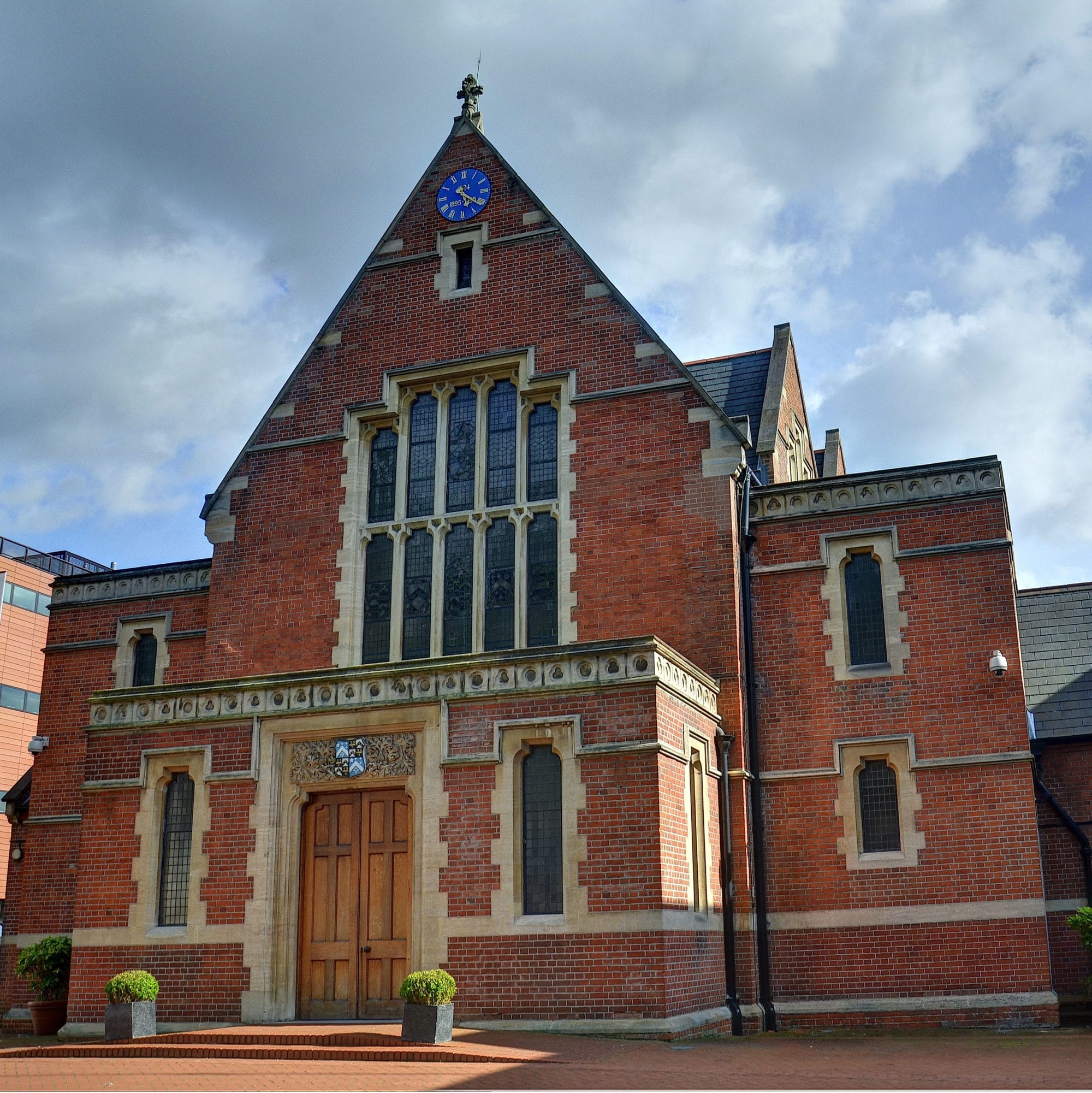
Latymer Upper School
11+ entry in September 2027: the papers, the interview, financial support and the details that matter before accepting a place.
The deadline was 12 October 2026. Late applications are not accepted.
Latymer Upper is the independent, coeducational day school in Hammersmith. It is separate from The Latymer School, the grammar school in Edmonton.
At a glance
- School
- Independent · coeducational · day
- Main entry
- 11+ · Year 7
- External Year 7 places
- About 124Around 168 pupils in the full year group
- 2027 applications
- Closed · no late registrations
- Entrance tests
- Maths and two English papers
- Termly tuition
- £10,675 incl. VAT2026–27; lunch charged separately
- Financial support
- Bursaries of 25–100%
- Nearest station
- Ravenscourt Park · 2-minute walk
Admissions contacts & visiting
- Admissions and bursaries
- admissions@latymer-upper.org020 8148 4519
- School office
- 020 8629 2024enquiries@latymer-upper.org
School address
237 King Street, Hammersmith, London W6 9LR- Getting there
- Ravenscourt Park (District line) is about two minutes on foot; Hammersmith stations are about ten minutes away. The school does not run a coach service.
- Parking
- The school describes nearby non-resident metered parking as limited. Check the street signs and allow time to walk; a visit booking does not reserve parking.
Inspection report
- Inspectorate
- Independent Schools Inspectorate
- Inspection
- 14–16 November 2023
- Outcome
- All standards met
Inspectors praised intellectual challenge, co-curricular provision and support for wellbeing. Next steps concerned evaluating curriculum changes and using assessment data consistently across departments.
Who can apply?
- Year 7 applicants normally follow their age cohort: September 2015–August 2016 births for September 2027 entry.
- There is no published distance catchment or sibling preference. This is a day school; plan a sustainable daily journey.
- Candidates must attend the examination in Hammersmith. Overseas testing is not available.
- The school requires fluent English and evidence of the right to live and study in the UK; it does not sponsor Child Student visas.
Age exceptions, learning support and priority
The admissions policy allows consideration of documented exceptional medical circumstances and summer-born children whose Reception start was deferred to age five in line with Department for Education guidance. These cases need agreement with admissions; they are not a general option to sit the test in a different year.
Looked-after children receive priority subject to the school’s admissions criteria. A sibling already attending does not provide preference. Selection rests primarily on academic merit, with the interview and current-school reference also considered.
Declare learning, medical and access needs at registration, including relevant assessments and EHCP information. The published 2027 deadline for supporting documents was midday on 14 October 2026. Seek advice immediately if a need has only just been identified.
Latymer explicitly describes its site as busy, loud and crowded. Ask about transitions between lessons, breaktime spaces and the arrangements your child actually needs. The school considers reasonable adjustments individually, within the constraints of its site.
Key dates for 2027 entry
All dates and times are UK time.
School registration closed
No late registrations.
Access evidence and music applications
Written entrance examination
Allocated morning or afternoon sitting; at Latymer.
School references requested
First-stage decisions
Interview schedules sent by 15 December.
Interview session
Half a day; shortlisted candidates only.
Music scholarship auditions
Final offers: February 2027. Acceptance: March 2027. Exact dates are still to be confirmed on the school timetable. Bursary applicants must follow the deadline in their registration confirmation.
How to apply
Registration closed on 12 October 2026
The 2027 intake is open only to candidates already registered. For a later intake, check the school’s admissions page for the new registration timetable.
Sit the papers on 2 December
Attend your allocated session in Hammersmith. If another exam clashes, tell both schools: Latymer can sometimes change the session, but has no alternative exam day.
Check the decision on 8 December
Shortlisted children return on 6 January for classroom activities and an individual interview. The school requests a reference from 7 December; interview times arrive by 15 December.
Consider the February offer
The school says families have three weeks to decide. Follow the exact March deadline and deposit terms in the offer. Waiting-list offers follow the acceptance deadline.
Places, competition and what the figures mean
The size of the intake
| Measure | Figure | Meaning |
|---|---|---|
| Typical Year 7 cohort | 168 | The full year, including pupils moving up from Latymer Prep. |
| External entry | About 124 | The number relevant to families applying from another primary or prep school. |
| Prep transfer | Usually 44 | Included in the overall year group; not 44 additional external places. |
For the 2025 intake, a December 2024 discussion on the ElevenPlusExams forum recorded 1,350 first-round candidates, 450 interview invitations and 126 places. Those historical, unofficial figures imply roughly 10.7 candidates per place and a one-in-three first-round shortlist. They are context, not a verified 2027 acceptance rate: schools can make more offers than the number who eventually join.
Latymer does not publish a fixed 2027 pass mark in its admissions material. A score recommended by a commercial test provider is a practice target, not an official threshold. The school assesses examination performance, interview and reference together.
Exam format
Mathematics
2 December 2026
School-set written paper
- Subjects
- Multiple choice and written solutions
- Time
- 60 minutes
No calculator; ruler permitted in the official samples.
Maths in detailEnglish
2 December 2026
Two separate papers
- Subjects
- Reading comprehension and descriptive writing
- Time
- 35 + 45 minutes
The published samples use 25 multiple-choice reading questions.
English in detailInterview session
6 January 2027
Classroom activities and individual interview
- Focus
- Character, curiosity and response to teaching
- Time
- Half a day
Written testing totals 2 hours 20 minutes, with a 20-minute break. Latymer uses its own papers: there is no separate ISEB, CAT4, verbal-reasoning or non-verbal-reasoning test in the published 11+ route.
Latymer Upper papers
Start with booklet 1. Keep booklet 2 unseen for a timed practice later; both contain English and maths. The additional English papers follow, then every maths paper in the Elevenfold library.
Current school booklet 1
English 35 + 45 minutes · maths 60 minutesVillette comprehension, two descriptive-writing choices and a complete maths paper.
Current school booklet 2
English 35 + 45 minutes · maths 60 minutesJekyll and Hyde comprehension, two descriptive-writing choices and a different complete maths paper.
These are the school’s current downloads; the English covers are dated 2019. The school does not supply answer keys or mark schemes.
Archived English sample 1 · 2020 entry
Comprehension 35 minutes · writing 45 minutesPeter Ackroyd on the Thames Estuary. The writing task describes a train stopped in a tunnel.
Archived English sample 2 · 2020 entry
Comprehension 35 minutes · writing 45 minutesDen-building in Edgelands. Writing choices: an empty school early in the morning, or a river viewed from a bridge.
Extra reading practice · archived Paper D
25 questions · no time allowance printedBill Bryson on hiking in Shenandoah. Four choices per question; no writing task. Historical practice from SHLC’s Latymer Upper archive.
All papers on Elevenfold
View the collectionMaths Exemplar Paper A · undated
Section A: 20 minutes · no calculator
Older practice paper with a separate multiple-choice answer sheet. Use Section B for untimed practice; its time limit is not printed.
Maths sample entrance examination · undated
60 minutes · no calculator; ruler allowed
Extra practice paper with different questions from the two current school sample booklets.
Maths sample paper · undated
60 minutes · no calculator; ruler allowed
Same maths questions as current school sample booklet 2; choose one copy.
Maths sample 1 · undated, filed as 2021
60 minutes · no calculator; ruler allowed
Older undated practice paper: 20 marks in Section A and 50 in Section B. Its questions differ from current school sample booklet 1.
Maths sample 2 · undated, filed as 2021
60 minutes · no calculator; ruler allowed
Undated extra practice paper, with different questions from current school sample booklet 2.
Maths sample 1 · undated, filed as 2018
60 minutes · no calculator; ruler allowed
Same maths questions as current school sample booklet 1; choose one copy. No year is printed on this paper.
Maths sample 1 · undated, filed as 2017
60 minutes · no calculator; ruler allowed
Undated extra practice paper, with different questions from current school sample booklet 1.
English comprehension: reading precisely
Read a short passage together before setting a full timed paper. Ask your child to explain an answer using words from the text. This separates a reading difficulty from an unfamiliar word or a rushed choice.
- Time
- 35 minutes
- Questions
- 25 multiple choiceOne answer from A–E for each
- Marks
- 25One mark per correct answer
The current reading paper
| Part | Questions | What to be ready for |
|---|---|---|
| Understanding and inference | 1–15 | Follow events and speakers; work out what the text suggests about a person, mood or attitude. |
| Vocabulary in context | 16–20 | Choose the meaning that fits the sentence, not just a familiar definition. |
| Language and grammar | 21–25 | Recognise how words, sentences and literary techniques work in the passage. |
What to teach between papers
| Skill | Practise this | Ask your child |
|---|---|---|
| Speakers and references | Track who is speaking. Work out what “she”, “former” or “the same” refers to. | Whose viewpoint is this? Replace the reference with the person or thing it means and reread the sentence. |
| Meaning across the passage | Use more than one paragraph for questions about character or attitude. Watch for NOT and EXCEPT. | Which words support your answer? What makes the closest alternative wrong? |
| Words with several meanings | Check the meaning against the events. “Flight” may not mean air travel; “cool” can describe behaviour. | Does that meaning make sense if you put it back into the sentence? |
| Imagery and atmosphere | Recognise simile, metaphor, personification, alliteration and oxymoron; explain their effect. | What do these words make you picture or feel? Which detail creates that impression? |
| Grammar in context | Identify a word’s job: noun, verb, adjective, adverb or conjunction. Practise sentence types and subordinate clauses. | What is the word or clause doing here? Avoid judging by its ending or the sentence’s length alone. |
| Fiction and literary non-fiction | Read older fiction as well as reflective writing about places and experiences. Unpack one difficult sentence at a time. | Can you explain this sentence in your own words, then describe the narrator’s attitude? |
Grammar and literary terms: a quick reference
Grammar and literary terms: a quick reference
| Term | Meaning | Short example |
|---|---|---|
| Inference | An idea supported by clues in the text, rather than stated directly. | A character checks the door repeatedly: this may suggest anxiety, depending on the surrounding passage. |
| Simile / metaphor | A simile compares using “like” or “as”. A metaphor describes one thing as another. | “The road curved like a ribbon”; “a ribbon of road”. |
| Personification | Giving human actions or qualities to something non-human. | “The wind whispered.” |
| Alliteration / oxymoron | Alliteration repeats an initial sound. An oxymoron brings together apparently contradictory words. | “Soft summer sounds”; “deafening silence”. |
| Noun / verb | A noun names a person, place, thing or idea. A verb expresses an action or state. | In “The bird waits”, “bird” is a noun and “waits” is a verb. |
| Adjective / adverb | An adjective describes a noun. An adverb can modify a verb, adjective or another adverb. | “A quiet bird”; “waits quietly”; “very quiet”. |
| Conjunction | A word connecting words, phrases or clauses. | “and”, “but”, “because”, “although”. |
| Simple / compound sentence | A simple sentence has one main clause and no subordinate clause. A compound sentence joins two or more main clauses. | “The bird waits.” / “The bird waits, and the river rises.” |
| Complex sentence / subordinate clause | A complex sentence contains a main clause and a subordinate clause. The subordinate clause depends on the main clause. | “The bird waits until the rain stops.” Here, “until the rain stops” is subordinate. |
- Read the complete passage before answering. The current samples allow notes and highlighting on the passage.
- Underline negative wording such as NOT or EXCEPT. An option may be true of the passage and still fail to answer the question.
- Enter the chosen letter in the answer-sheet box. Check that the question number and answer line match.
- When reviewing, ask your child to point to the words supporting the answer and explain why the closest alternative is wrong. Separate a vocabulary gap from a misunderstanding of the passage.
Vocabulary to learn and use
Begin with five words from the top of the list. Explain each word in its passage and use it in a new sentence before revealing the meaning.
Descriptive writing: plan, develop and check
The writing paper lasts 45 minutes and is worth 25 marks in the current samples. Choose one of two tasks and aim for about one and a half to two sides. Keep to the requested subject and viewpoint; a complete description needs direction without an elaborate plot.
The current writing choices
| Paper | The task choices | Focus for practice |
|---|---|---|
| Current booklet 1 | A day in London from a homeless person’s perspective; or an insect in its natural surroundings. | Sustain a viewpoint; notice the relationship between the observer and the surroundings. |
| Current booklet 2 | The life of an elderly person living alone; or a bird in its natural surroundings. | Use specific actions and sensory details to suggest feelings. Avoid stereotypes or a catalogue of adjectives. |
Plan a route through the description: from a wider view to a close detail, or through a small change over time. Start a new paragraph when the focus changes. After writing, revise one paragraph for stronger detail before attempting another full piece.
A checklist for reviewing the finished piece
| Check | What to look for |
|---|---|
| The task | The subject, setting and viewpoint match the chosen question throughout. |
| Specific detail | Movements, sounds, textures and light belong to this scene. A bird or insect responds to its surroundings. |
| Feelings and viewpoint | Actions and observations suggest a mood. The description avoids stereotypes or a backstory that takes over. |
| Structure | Each paragraph adds a new focus or change. The ending feels deliberate rather than cut short. |
| Language | Nouns and verbs are precise. Imagery makes the scene clearer; ambitious words are used accurately. |
| Accuracy | Sentences are complete, tense is consistent and missing words or punctuation have been corrected. |
More writing tasks from the historical papers
More writing tasks from the historical papers
| Paper | Task choices | Focus for practice |
|---|---|---|
| 2020-entry sample 1 | A train stops in a tunnel between stations. | Develop the sights, sounds and feelings of one situation; keep the observer’s perspective clear. |
| 2020-entry sample 2 | Arriving alone at school early in the morning; or watching a river from a bridge for half an hour. | Give the description movement through changing light, sounds, attention or mood. |
Prioritise sentence boundaries, consistent tense and missing words during the final check. Use ambitious vocabulary when its meaning and spelling are secure. Latymer has not published a separate word-count target or detailed marking grid.
Mathematics: skills to teach and practise
Use the list below to choose the next lesson, rather than working through every topic in order. Keep practising a method until your child can explain it and use it in a new question.
- Current sample format
- 60 minutes · 60 marks
- Section A
- 20 multiple-choice questions20 marks · suggested 20 minutes
- Section B
- Written working · 40 marksSuggested 40 minutes
- Equipment
- No calculator · ruler permittedWrite in the booklet; no extra paper
- If calculations are slow or unreliable, start with written arithmetic, fractions and negative numbers.
- If arithmetic is secure but word problems cause difficulty, work on finding the original amount, combined ratios and translating words into equations.
- If one-step questions are secure, move to relative speeds, patterns, systematic counting and unfamiliar rules. Ask for a diagram, table or explanation as well as an answer.
Choose one or two targets, then try a different question a few days later. A wrong answer with a sound method needs a different response from a question your child did not know how to begin.
Calculation, fractions and negative numbers
Practise written multiplication and division, remainders, mixed-number calculations and the order of operations. Keep signs visible: subtracting a negative number increases the starting value. For a missing digit, work column by column and include any carrying or borrowing.
Check the method: Can your child estimate the answer first, then use the inverse operation to check it?
Finding the original amount from a fraction or percentage
Find one equal part before recovering the whole. When two fractions of the same amount differ by a known number, subtract the fractions first: that difference represents the known amount. Distinguish “a fraction of the original” from “a fraction of what remains”.
Check the method: Ask what represents the whole at each step. After a transfer or reduction, it may have changed.
Combining ratios and fractions of groups
Match the shared quantity before joining two ratios; then use the total or difference to find one part. In class or animal-group problems, distinguish a fraction of one subgroup from a fraction of everyone. For transfers, write the quantities before and after the change.
Check the method: Can your child state exactly which group is the denominator of the final fraction?
Translating words into equations
Keep the order of the instructions: doubling a number and then subtracting is different from subtracting and then doubling. Use a bar model or an equation when both sides contain the unknown. Compare two shopping totals to eliminate the unchanged items.
Check the method: Ask your child to put the answer back through the original instructions, not just repeat the same calculation.
Journey times, timetables and clock errors
Count forwards or backwards across an hour boundary; convert minutes to a fraction of an hour before using a speed. In timetable problems, include the walk to the station and compare journey lengths. A fast or slow clock needs a record of its error as time passes.
Check the method: Have your child label actual time and displayed time separately. For a train journey, check the latest arrival before choosing the departure.
Cyclists meeting and overtaking
Convert each speed to the same unit, such as laps per minute. For riders going in the same direction, subtract their rates to find how quickly a one-lap gap closes. For opposite directions, add their rates. A question asking how many overtakes occurred needs complete events, not a rounded decimal.
Check the method: Can your child explain why one problem needs addition of rates and the other subtraction?
Work rates and inverse proportion
Separate the amount of work from the time and number of workers. First find a rate for one person, one question or one day. With identical workers, fewer workers need more time for the same job. When two kinds of task take different times, express both in the same unit of work.
Check the method: Ask whether the answer should be larger or smaller before calculating, and what equal-rate assumption the problem makes.
Compound areas, missing lengths and shaded regions
Complete a larger rectangle or split a shape into rectangles and triangles. Recover an unlabelled length from aligned edges before finding the area or perimeter. Use perpendicular height for a triangle; a sloping side is not automatically its height. A shaded diamond can be found by removing corner triangles.
Check the method: Can your child explain where every length comes from, and give area in square units rather than length units?
Clock angles and isosceles triangles
Allow for the hour hand moving between hour marks: it travels half a degree each minute. Decide whether the question wants the smaller angle. For an isosceles triangle with an angle ratio, try each possible role for the unequal angle and check that all three angles total 180°.
Check the method: At half past an hour, can your child show where the hour hand really points?
Coordinates, reflections and three-dimensional measurement
Read coordinates in the correct order and preserve perpendicular distance when reflecting in a diagonal mirror line. For cubes packed into a cuboid, count how many fit along each dimension before multiplying. Keep centimetres, square centimetres and cubic centimetres distinct.
Check the method: Ask your child to check all vertices after a reflection; for packing, a volume division alone can overlook whether the cubes fit.
Sequences, tile patterns and a rule for any term
Check whether the step is constant, increasing or alternating. For a shape sequence, separate the changing part from the fixed part. Use a supplied rectangle or symmetry hint to obtain a formula, then work backwards from a tile total to the pattern number.
Check the method: Can your child explain why an impossible tile total cannot occur, instead of drawing more patterns until time runs out?
Counting every possibility without duplicates
Organise coins, bead piles or number combinations in a table. Fix one quantity and change the next systematically. Check whether zero is permitted and whether the order matters. For multiples of either of two numbers, subtract the overlap counted twice.
Check the method: Ask your child to explain how the list proves nothing has been missed. Swapping two identical-sized piles does not make a new arrangement.
Factors, digit products and squared digits
Break a target into factors before looking for possible digits. For a non-zero product, each digit is 1–9, so the product cannot have a prime factor greater than seven. Use this to prove some products impossible. For a sum of squared digits, list the possible squares first, then consider digit order and any restrictions on zero or repetition.
Check the method: Can your child give a reason for impossibility, rather than saying that they tried lots of numbers?
Following an unfamiliar mathematical rule
Write the rule as separate steps before doing any arithmetic. Multiplying digits, adding digits and adding squared digits are different operations. With nested operations, finish the inner one first. Test an “always” claim with a deliberate counterexample.
Check the method: Can your child apply the rule to new inputs and explain why a single counterexample is enough to disprove “always”?
Averages, frequencies and probability
Recover a total from the mean before using conditions such as “different”, “positive” or “odd”. Read frequency graphs carefully, add the relevant categories and use their proportion to estimate a future count. An uneven set of experimental results needs interpretation rather than an automatic assumption of equal outcomes.
Check the method: Ask your child to distinguish an observed frequency from a guaranteed result on the next trial.
Organising linked conditions in tables and diagrams
Use a two-way table for overlapping descriptions, such as colour and ear size. For number pyramids, carry the addition or subtraction rule through every level before testing possible bottom rows. Keep conditions such as positive whole numbers and one value being larger than another visible.
Check the method: Can your child check the final answer against every condition, including one that appears only in the last sentence?
A practical approach to the 60-minute paper
- Aim to move from Section A to Section B after about 20 minutes. A difficult one-mark question should not consume the time needed for several written parts.
- In Section B, write a clear equation, labelled diagram or table in the answer space. Use the marks beside a part to judge how much working to show.
- If stuck, leave room, move on and return. The school’s sample instructions explicitly say not to worry if every question cannot be finished.
- In the final check, look for copied digits, negative signs, units, missing parts and an answer to a different quantity from the one requested.
- Use the current booklets for full-format rehearsal. Some older library papers have different mark totals or response layouts; follow their own instructions for additional practice.
A practical preparation plan
Choose the amount of work around your child’s starting point and other commitments. Use short, focused sessions between papers; the aim is to transfer a method to a new question.
Begin with one booklet
Use booklet 1 to identify gaps; English and maths can be attempted in separate sessions. Record questions your child cannot explain as well as wrong answers. Separate arithmetic slips, unfamiliar methods, misunderstood wording and time pressure.
Teach two maths targets each week
Choose the most useful gaps from the skills above. Model one example, practise several short questions and finish with a different word problem. Return to the same skill a few days later without showing the earlier solution.
Read closely and retrieve vocabulary
Use a short literary or non-fiction passage. Discuss its viewpoint, mood and one difficult sentence. Learn a small group of words in context, then ask for the meanings again later with the answers hidden.
Write and revise one description
Choose a fresh subject and plan its viewpoint, movement and ending. After writing, revise one paragraph for precise details and sentence control. Keep a short list of recurring punctuation or tense errors.
Add timing when the method is secure
Build towards 35-minute comprehension, 45-minute writing and 60-minute maths. Use an unseen paper for a realistic check. Review it before scheduling another full test; a higher score on the same paper is not evidence that a new problem will be manageable.
Rehearse listening as well as answering
Discuss a real interest or a book, then try an unfamiliar problem with a small hint. Encourage your child to explain an idea, listen and revise it. Keep the 6 January interview half-day free if shortlisted.
The interview and classroom session
Shortlisted candidates return on 6 January 2027 for half a day. This combines learning activities in classroom settings with an individual interview. Latymer names three qualities it wants to understand: character, curiosity and “teachability”. The current-school reference forms part of the wider decision.
What to expect, and how to prepare
| Part | Published purpose | Useful preparation |
|---|---|---|
| Classroom learning | See how a child engages with teaching in an unfamiliar setting. | Listen to instructions, try a new method and explain what changed in your understanding. |
| Individual interview | Explore character and curiosity alongside academic performance. | Discuss a real interest, a book or an idea in your own words; expect a follow-up question. |
| School reference | Add the current school’s perspective to the admissions assessment. | Ensure the registration details for the school are correct; Latymer requests the reference directly. |
Try an unfamiliar problem together and offer one hint. Ask your child to explain the first approach, listen and revise it. A thoughtful response to help is more useful than a memorised answer.
For conversation, choose a real interest or a book the child knows well. Ask what surprised them and what they would like to understand next. Practise follow-up discussion rather than a memorised answer.
Latymer publishes neither an interview question bank nor a fixed duration for the individual conversation. Its admissions policy says no specific preparation is needed.
Interview schedules are due by 15 December. Keep the allocated half-day free and follow the invitation for arrival, clothing and collection. If your child has agreed access arrangements, check how these apply to both the classroom activities and the individual conversation.
Fees & deposits
- Upper School tuition
- £10,675 per term2026–27 · VAT included
- Annual tuition equivalent
- £32,025Three terms at the current rate
- 11+ registration
- £220Non-refundable · VAT included
- Acceptance deposit
- £2,400Read the offer’s refund and credit conditions
Lunch, extras and the deposit terms
2026–27 costs beyond tuition
| Item | Published amount | Budget note |
|---|---|---|
| Lunch | £443 autumn; £352 spring; £310 summer | £1,105 for the full year; optional. Packed lunches are permitted. |
| Music lessons | £42 per 30-minute lesson | VAT included; instrument hire is £37 per term. |
| LAMDA · block of 10 | £246 solo; £196 duo; £171 group | VAT included. |
| Public examinations | Exam-board cost | Charged separately; not subject to VAT. |
At the September 2026 rates, annual tuition and school lunch total £33,130. Budget separately for uniform, transport, trips, lessons and other extras. Fees for September 2027 have not yet been confirmed.
The £2,400 acceptance payment is described as non-refundable on confirmation and held until the pupil leaves, after liabilities are settled. Read the offer’s terms for withdrawal before entry and the final credit against outstanding charges before paying.
Fees and extras are due by direct debit on the first Friday of term. The advertised monthly-payment alternative is a credit arrangement subject to affordability and terms; compare its total cost with paying termly.
Bursaries: who receives help?
Means-tested bursaries cover 25–100% of tuition at 11+ and 16+. The school says it can now support one in four Upper School pupils, with average fee remission above 80%. That describes its programme; it does not mean one in four applicants is guaranteed funding.
The application sequence
| When | What happens | What parents need to do |
|---|---|---|
| At school registration | Request a full or partial bursary. | Use the separate financial-form link in the confirmation email. |
| By the stated financial deadline | Submit the form and supporting documents. | Follow the deadline in your confirmation; do not wait for an interview invitation. |
| After shortlisting | External specialists review finances; a home visit may follow. | Provide a complete picture of income, spending, savings, property and individual circumstances. |
| With the February offer | The school confirms any award. | Read both the percentage and what additional costs are covered. |
| Each spring thereafter | Annual financial review. | Update the school about material changes in family circumstances. |
Use the bursary deadline in your registration confirmation. Submit the financial form and documents promptly; do not wait for entrance-test results. If no deadline is given, ask admissions before assuming extra time.
The financial assessment considers income, spending, savings, property and family circumstances. An income figure alone cannot establish eligibility. A family able to pay part of the fee can still apply for a partial bursary.
The published examples include full awards for low-income families, a 70% award for a self-employed family renting their home, 50% for a working family with a mortgage and some savings, and 25% where higher income sits alongside substantial commitments. These are illustrations of past decisions, not a tariff.
Full-bursary applicants have the registration fee waived. Partial-bursary applicants normally pay £220; contact admissions if that itself is a barrier. If the eventual award changes category, the school adjusts the registration charge on acceptance: a full award can trigger a refund, while partial or no support can make it payable.
There is no higher academic pass mark for bursary applicants. Children selected for interview who have requested support are considered, subject to available funding. Separated parents can provide their financial information separately and confidentially; both parents’ positions are assessed.
A full bursary may bring additional help with uniform at entry and Year 9, public-examination fees, and music or drama lessons where ability is demonstrated. Trip assistance is available to families across the school. Ask what the award covers before building a household budget around “100%”.
Annual review can increase or reduce support when circumstances change. The school reports that its 2026 review left full awards unchanged, increased support for 14 families, and reduced or ended support for six following significant financial changes. New awards remain discretionary and are not subject to appeal.
Music scholarships & auditions
Music is the only scholarship category at 11+. Latymer does not offer academic scholarships. Art, drama and sport scholarships are available at 16+, not through the Year 7 application.
- 2027 application deadline
- 14 October 2026 · middayNow passed
- Audition
- 16 January 2027
- Standard music scholarship
- Up to 20% fee remissionWith tuition in two instruments
- Walter Legge scholarship
- Up to 40%One major 11+ award for exceptional ability
Applicants should ideally offer two instruments, including an orchestral instrument, and be around Grade 5 standard on their main instrument. Voice or composition can count as a second instrument. Exceptional players around Grade 7 or above on one instrument can be considered individually. Standard matters; the guidance does not require a particular exam certificate.
What the published audition requires
| Element | Requirement |
|---|---|
| Prepared music | Two contrasting pieces on the main instrument; a third on the second instrument if offered. Total playing time at 11+ must not exceed ten minutes. |
| Sight-reading | A short piece at an appropriate standard on the main instrument. |
| Aural work | Singing a melody; singing the lower part of a two-part melody; singing the lower note in a two- or three-note chord. |
| Accompaniment | The school provides an accompanist. |
Music awards can fund instrumental tuition without a fee remission. All candidates must first meet the academic entry requirements; an audition is not a substitute for the entrance examination. Continued progress and participation are reviewed annually.
Exam results
- GCSE 2026 · grades 7–9
- 96%
- GCSE 2026 · grades 8–9
- 88%
- A level 2026 · A*–A
- 81%
Grade detail, destinations and the curriculum change
Results published by the school
| Measure | 2026 result | Denominator |
|---|---|---|
| GCSE grade 9 | 64% | Subject results, not the percentage of pupils. |
| GCSE straight grade 9s | 31 students | Pupils receiving 9 in every subject they sat. |
| A level A* | 43% | A-level subject results. |
| A level A*–B | 95% | A-level subject results. |
| First-choice university course | 83% | Students securing their first choice in the school’s results announcement. |
| Oxford or Cambridge destinations | 23 students | 11 Oxford and 12 Cambridge. |
These results belong to a selected cohort and do not measure how much progress an individual child would make. The 2027 Middle School curriculum changes also matter: a pupil joining Year 7 in 2027 will reach a different programme from the pupils behind the 2026 GCSE figures.
School life & the changing curriculum
A typical Year 7 has 168 pupils, but pastoral groups are much smaller: ten tutor groups of 16–18, with seven teaching classes of 24. Children have at least three peers shared between their tutor and teaching groups. The external intake is usually drawn fairly evenly from state primaries and independent prep schools.
The first years in practice
| Area | What the school publishes |
|---|---|
| Languages | Two modern languages from French, German, Mandarin and Spanish, alongside Latin in Years 7–8. |
| Technology | A Chromebook is supplied in Year 7 and taken home; Google Classroom supports lessons and homework. |
| Settling in | A June induction evening, a September induction afternoon and an outdoor bonding day in the first week. |
| Mathematics groups | From Year 8, grouping responds to progress and learning needs; pupils may move as these change. |
| Sport | A weekly games afternoon and on-site PE; many team fixtures take place at weekends. |
| Food | School lunch or a packed lunch in the dining hall; notice is needed to stop paid lunches. |
The school’s planned Middle School reform begins in autumn 2027. Its current plan retains eight, nine or ten GCSEs, combined with internally designed longer courses and shorter electives. It is not a proposal to remove all GCSEs.
Published combinations from autumn 2027
| GCSEs | Long courses | Short courses |
|---|---|---|
| 10 | None | 5 |
| 9 | None | 10 |
| 9 | 1 | 5 |
| 8 | 1 | 10 |
| 8 | 2 | 5 |
Long courses include History of Art and Interdisciplinary Perspectives. Proposed short-course subjects include artificial intelligence, financial literacy, entrepreneurship, sports psychology and extensions such as data science and Greek tragedy. An internal course is not another GCSE; the school plans a portfolio and transcript recording this wider work.
For a family comparing schools, the practical question is which route preserves the subjects a child may want at A level while leaving room for these courses. The first reformed cohort is still ahead of its final outcomes, and the options available when a 2027 entrant reaches Year 10 may develop further.
The urban setting is central to school life. It gives access to London and public transport, but the school’s own warning about noise and crowding deserves a visit. For a child who finds transitions or crowded spaces difficult, discuss a normal day rather than relying on an open-day atmosphere.
Other entry routes
Routes beyond Year 7
| Route | Availability | Assessment and timing |
|---|---|---|
| Years 8, 9 and 10 | Usually no more than one or two vacancies in a year group; some years none. | For September 2027, expressions of interest are open. Full registration is expected in December if places exist; deadline midday 29 January 2027. Tests and interviews follow in March. |
| Sixth Form · 2027 | Registration closed 23 September 2026. | Exam 3 November; interview 21 November; offers 1 December; acceptance midday 9 December. |
| Sixth Form · 2028 | Registration is due to open May 2027. | Separate assessment of maths, written communication and general problem-solving/critical thinking. |
Occasional places are September starts only. Latymer does not admit into Year 11 or Year 13, or partway through the academic year. Candidates must attend testing in Hammersmith. Language choices can depend on subjects already studied; check these conditions before registering.
For external Sixth Form applicants taking GCSEs, the published minimum is nine grades at 7 or above, including at least four at 8 or 9 covering intended A-level subjects or related disciplines. A-level maths requires GCSE maths 8; further maths requires 9. Meeting these grades does not replace the entrance assessment or guarantee an offer.
Nearby schools to compare
- Godolphin & LatymerAbout 0.4 miles
Girls’ day school. Its London 11+ Consortium assessment differs from Latymer Upper’s own written papers.
- St Paul’s Girls’ SchoolAbout 0.8 miles
Girls’ day school with ISEB, written papers and interview; a 50-minute home-to-school journey limit.
- St Paul’s SchoolAbout 0.3 miles
Boys’ school across the Thames. Check the separate St Paul’s Juniors route for an 11+ comparison.
Distances are straight-line estimates between school sites, not walking routes. River crossings can make the actual journey substantially longer.
School arrangements and fees can change. The dates above are for September 2027 entry; tuition figures are the published 2026–27 rates.