Independent school · Edgware, north-west London
North London Collegiate School
11+ entry in September 2027: admissions, every NLCS paper on Elevenfold, detailed English and maths preparation, and a vocabulary checklist.
September 2027 entry · UK time
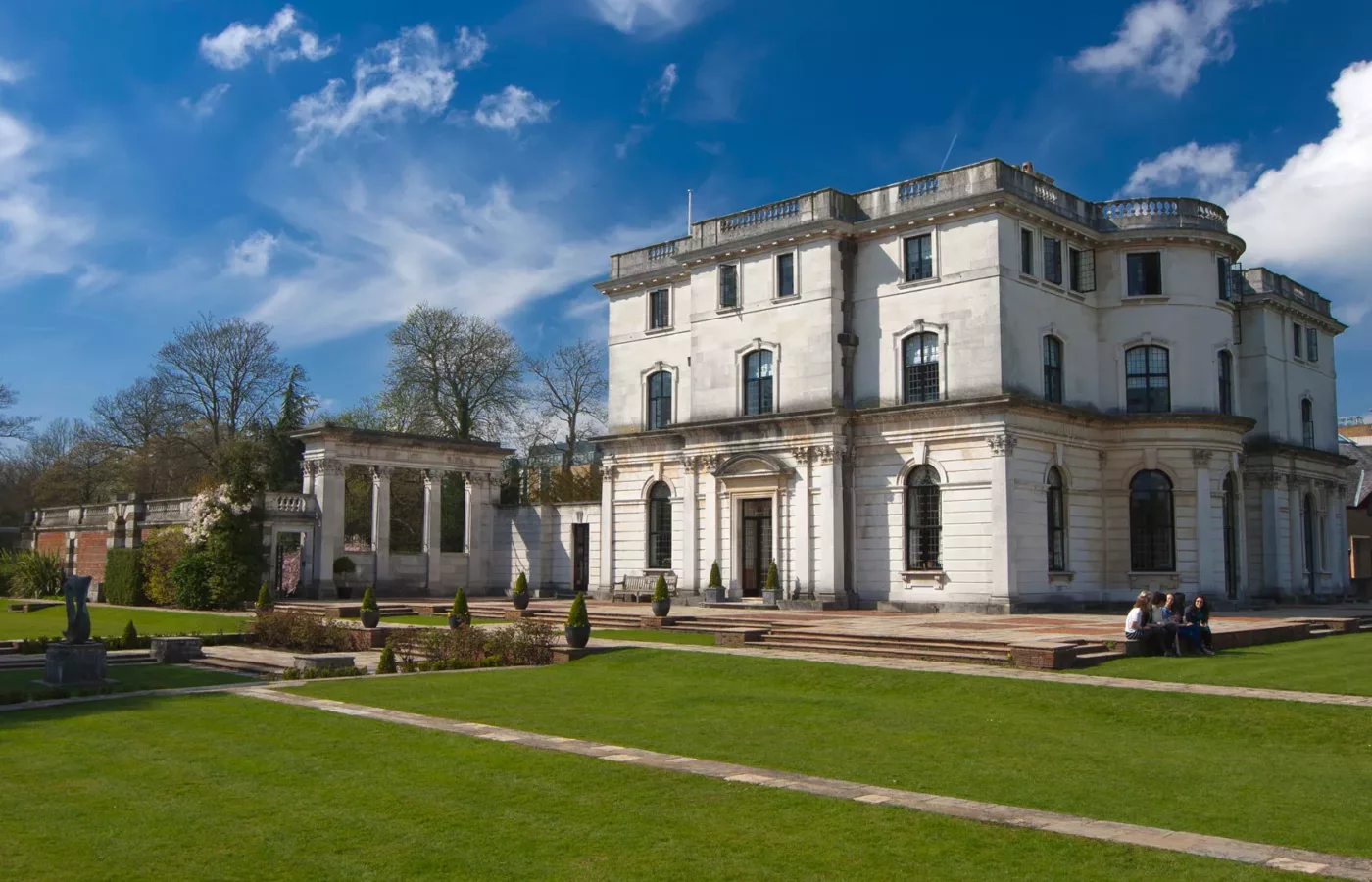
North London Collegiate is a girls’ day school at Canons in Edgware. At 11+, applicants take English and maths papers written by the school. Shortlisted pupils are then invited to an academic interview.
Find the application dates, choose a clean practice paper and use the subject guides to plan focused tuition. The vocabulary checklist can be used on screen or printed for practice at home.
At a glance
- School
- Girls’ independent day schoolAges 4–18 · Edgware, north-west London
- External Year 7 places
- About 70–75For children joining from other schools; about 45 pupils also move up from NLCS Junior School
- Apply by
- 13 November 20264pm UK time · September 2027 entry
- Entrance examination
- 3 December 2026English and maths · 75 minutes each
- Mathematics
- Non-calculatorWritten answers and working
- Reasoning tests
- No separate reasoning paperThere is no standalone verbal or non-verbal reasoning test; the maths paper still includes logic and spatial problems.
- Senior tuition
- £10,365 per term2026–27 · VAT included; lunch and transport extra
- Financial assistance
- Bursaries up to 100% of feesFinancial help based on family income and assets; available at 11+ and 16+
Admissions contacts & visiting
- Senior admissions
- admissions@nlcs.org.uk
- Senior School telephone
- 020 8952 0912
- Visitor entrance
- 57 Dalkeith Grove, Stanmore HA7 4SQUse this entrance for a school visit. Canons Drive is the postal address and a different entrance.
- Transport team
- 020 8951 6490travellingtoschool@nlcs.org.uk
School address
57 Dalkeith Grove, Stanmore HA7 4SQ- Getting there
- From Stanmore station, allow about 10 minutes on foot to the Dalkeith Grove visitor entrance. The school gives walks of about 8 minutes from Canons Park through the park, or 15 minutes from Edgware, to the separate Canons Drive entrance.
- Parking
- Visitors are directed to parking by a marshal at Dalkeith Grove. Ask your school contact in advance if you need an accessible or reserved space.
Coaches, station shuttles and the journey home
The daily journey
| Service | Published arrangement | What to check |
|---|---|---|
| Main coaches | Aim to arrive by 8.25am; afternoon departure 4.15pm. | Check the route finder, then ask the transport team whether a place is available at the proposed stop. |
| Station shuttles | Free shuttles: Edgware and Stanmore in the morning; Edgware and Canons Park in the afternoon. | Evening shuttles to Harrow-on-the-Hill and Harrow & Wealdstone are listed for Monday–Thursday. Confirm the departure time before booking an activity. |
| Late coaches | Potters Bar and Baker Street services; £9.50 extra per journey. | Check which stops and days are served if your child plans to stay for activities after the 4.15pm departure. |
Routes include Hammersmith, Kensington, Highbury, Ealing, Finchley, Muswell Hill, St Albans, Northwood and Watford. Check the actual stop and journey time in the route finder; routes can change between school years.
Inspection
- Full inspection · ISI
- 16–18 April 2024All applicable standards met
- Capacity inspection · ISI
- 25 June 2026Review of a proposed increase in whole-school capacity
The Independent Schools Inspectorate (ISI) found that all applicable standards were met in April 2024. It identified effective teaching, pastoral support and safeguarding, and recommended wider use of technology in learning.
Why there are two inspection reports
The June 2026 visit assessed a proposed increase in maximum pupil numbers from 1,130 to 1,180. Inspectors recommended approval after considering staffing, counselling, supervision and room use. This was a capacity review, not a new full inspection of teaching.
The 1,180 figure covers the whole school; it is not the Year 7 intake. Under the current inspection framework, ISI reports whether standards are met rather than awarding an Ofsted-style headline grade.
Who can apply?
The main 11+ route is for girls applying in Year 6 to join Year 7. NLCS considers the written examination, interview and current-school reference. Its published admissions policy does not set a catchment boundary or give priority by postcode.
- Applicants must have permission to live and study in the UK and be able to attend school regularly. Overseas families need suitable guardianship arrangements.
- Tell admissions about learning needs, disabilities or other circumstances affecting the assessment when you register. Supply professional reports for any requested adjustment, such as extra time.
Family links, overseas sittings and assessment adjustments
Rules that can affect an application
| Circumstance | NLCS policy |
|---|---|
| Sibling, parent or staff connection | Applicants must meet the required standard. Among candidates who do, NLCS may give preference to a current pupil’s sister, a former pupil’s or current staff member’s daughter, or a candidate with a particular skill, talent or aptitude. |
| English as an additional language | Applicants need enough spoken and written English to take part fully. Tell admissions about the child’s language background and education if these may affect the assessment. |
| Taking the examination overseas | NLCS may agree to supervised papers at the child’s school or an impartial centre, such as a British Consulate. Obtain written agreement from admissions; external centre costs are paid by the family. |
| Illness, absence or bereavement | Contact admissions promptly if illness, a long absence, bereavement or another significant circumstance may affect performance. Explain what happened and ask what evidence the school needs. |
| A previous application | A child may be assessed at most twice for entry to Years 7–10, including both 11+ and occasional-place applications. A later application at 16+ is still possible. |
An existing diagnosis or extra-time arrangement at the current school does not by itself confirm what NLCS will provide. Send the reports early and ask admissions to confirm the entrance-exam arrangements in writing.
Dates & deadlines for 2027 entry
All dates and times are UK time.
- Register
11+ registration closes
4pm UK time
Bursary, music and sports applications due
Submit the bursary or scholarship application and its supporting documents by this date; the main registration form is a separate step.
English and maths examination
Interviews for shortlisted applicants
Sports scholarship trials
Music scholarship auditions
Offers sent
NLCS gives early March 2027 for accepting an offer but has not yet published the exact day. The offer email will give the deadline and deposit required.
How to apply
By 4pm on 13 November 2026 · submit the school application
Complete the online registration form and pay the non-refundable fee: £150 for a UK application or £200 for an overseas application. Declare assessment adjustments and any bursary, music or sports application. Supporting bursary and scholarship applications are also due on 13 November.
3 December 2026 · attend the English and maths examination
All applicants registered by the deadline are invited. Each paper lasts 75 minutes. NLCS requests a confidential reference from the current school after registration closes; let the school know to expect it.
11–22 January 2027 · attend an interview if invited
The 30-minute interview includes spoken English and maths questions. Only shortlisted applicants attend; parents are not interviewed. Sports trials are on 13 January and Handel music auditions on 16 January.
12 February 2027 · receive the decision
Decisions arrive by email. Offer holders can visit before deciding. Read any financial-support award alongside the offer, then accept and pay the deposit by the stated deadline in early March.
Places, selection and the waiting list
The Year 7 intake
| Applicants | Published places |
|---|---|
| Children joining from other schools | About 70–75 |
| NLCS Junior School pupils moving up | About 45; they normally transfer without taking the 11+ examination |
Written performance, the interview and the school reference inform the decision. NLCS does not publish a fixed pass mark, current applicant or offer totals, or the interview cut-off. Assessment results and individual feedback are not released to parents.
If a Year 7 place becomes available later, the school contacts assessed candidates on its waiting list. The occasional-place form is for Years 8–10; it is not a late application route for Year 7.
The examination at a glance
English
3 December 2026
Written paper · not multiple choice
- Subjects
- Reading comprehension and writing
- Time
- 75 minutes
Current published sample: 35 minutes for comprehension, then a 20-minute story continuation and a 20-minute discussion. Both writing tasks are compulsory.
Inside the English paperMathematics
3 December 2026
Written answers and working
- Subjects
- Arithmetic, geometry and multi-step problem solving
- Time
- 75 minutes
No calculator. Clear working may earn marks even when an answer is incomplete. No separate reasoning paper.
Inside the maths paperInterview
11–22 January 2027 · shortlisted pupils
Individual pupil interview
- Focus
- Spoken English and maths, conversation and the pupil’s own questions
- Time
- 30 minutes
An academic assessment as well as a chance to meet the pupil. Parents are not interviewed.
Interview detailNLCS papers
Start with the current school samples below: one maths paper and the December 2022 English paper. Both allow 75 minutes. Download the English reading insert as well as the questions.
- English: comprehension & both writing tasks
- Maths skills & topic practice
- 50-word vocabulary checklist
- Plan the next tutoring session
Current official mathematics sample
75 minutes · no calculator · clean paper25 numbered questions. This is the same question set as the library paper labelled “2022”; choose one copy for an unseen attempt.
Current official English sample · December 2022
75 minutes · questions + reading insert35 minutes for comprehension, then two 20-minute writing tasks: a story continuation and a discussion. Download both files.
For a second set of questions, use December 2020 maths and January 2021 English. The older maths paper allows 60 minutes; the English paper allows 75.
December 2020 mathematics · clean archive copy
60 minutes · no calculator · clean paper16 numbered questions. Use this copy for an unseen attempt. The library copy below contains worked answers in green.
January 2021 English paper
75 minutes · passage included35 minutes for comprehension, then a 20-minute story continuation and a 20-minute discussion. The passage is included in the same file.
The library includes these two maths papers, with practice and answer options. The clean downloads above contain the same questions.
All papers on Elevenfold
View the collectionMaths sample · undated, filed as 2022
75 minutes in the current school version
Same questions as the current school sample above. This undated paper is filed as 2022.
December 2020 maths · annotated copy
60 minutes on the original cover
This copy contains worked answers in green. Use a clean copy for an unseen timed attempt.
Five older English papers · all downloads
Undated English sample: Tom Sawyer
80 minutesOlder format: 30 minutes for reading, 30 minutes for a continuation and 20 minutes for a discussion. Useful extra practice; allow 80 minutes for this paper.
January 2011 English paper
75 minutesArlington Park by Rachel Cusk: Juliet walks her children to school. Reading: 45 minutes; one writing task: 30 minutes. Write the hairdresser’s thoughts as she prepares for work; adopt her viewpoint. Historical format; use for extra practice.
January 2010 English paper
75 minutesMolly and Hannah are staying with their grandparents; family tension during a storm. Reading: 45 minutes; one writing task: 30 minutes. Retell the evening from Hannah’s perspective, maintaining a voice different from Molly’s. Historical format; use for extra practice.
January 2009 English paper
75 minutesNever Trust a Parrot by Jeremy Strong: Jamie and Nemesis. Reading: 45 minutes; one writing task: 30 minutes. Continue after the parrot bites Jamie, without introducing new characters. Historical format; use for extra practice.
January 2008 English paper
75 minutesDeep Secret by Berlie Doherty: Grace, Madeleine and Colin near a river. Reading: 45 minutes; one writing task: 30 minutes. Continue after Grace falls into the river, without introducing new characters. Historical format; use for extra practice.
Older shared maths paper & consortium collection
This older NLCS-branded sample contains the same questions as the 2010 Consortium Group 2 paper. Complete it once, then choose a different paper for fresh practice.
Older NLCS-branded maths sample / 2010 Group 2
75 minutes · no calculator · 42 questionsExtra practice in arithmetic and problem solving. This shared historical paper uses its own 75-minute instructions.
English: comprehension, story continuation & discussion
Prepare for three parts: reading comprehension, a story continuation and discussion writing. In comprehension, explain what the passage suggests and how the writer creates that effect. Support each interpretation with a short, relevant quotation.
- Comprehension
- 35 minutes50 marks in the current published sample.
- Story continuation
- 20 minutes25 marks. Continue the given story.
- Discussion writing
- 20 minutes25 marks. Develop a reasoned response to an idea.
Comprehension: skills, marks and strong answers
| Skill in the current published sample | Marks | What a strong answer needs |
|---|---|---|
| Atmosphere · Q5 | 8 | Identify the mood, choose two short quotations and explain the particular words that create it. Give an explanation for each quotation. |
| Word choice and imagery · Q6 | 6 | Explain the picture or idea created by each description, then its effect on the character, mood or reader. Naming a simile alone is incomplete. |
| Feelings, structure and punctuation · Q7 | 8 | Explain the narrator’s feelings, then show how sentence length, paragraph placement or punctuation expresses them. The question gives 2 marks for feelings and 6 for structure and punctuation. |
| Character across the passage · Q9 | 10 | Make several supported points about the narrator. Choose evidence from different parts of the text and explain what each detail reveals. |
| Vocabulary in context · Q10 | 5 | Give a meaning or replacement that fits the original sentence. Check that the sentence still makes sense with the replacement. |
| Short answers · Q1–4 and Q8 | 13 in total | Find the requested detail, explain an attitude or compare ideas concisely. Follow the instruction to quote or use your own words, and include enough information for the marks available. |
Writing: practise both compulsory tasks
| Task | What to include | Check before finishing |
|---|---|---|
| Story continuation · 20 minutes · 25 marks | Continue from the given ending. Keep the narrator, tense and circumstances consistent. Plan a few connected events and a deliberate ending. | Viewpoint and tense stay consistent; events follow logically; paragraphs and punctuation are controlled. |
| Discussion · 20 minutes · 25 marks | Answer the idea directly. Develop reasons and specific examples, consider another reasonable view and reach a conclusion. | Each paragraph develops the argument; examples support a point; the conclusion follows from the discussion. |
Choose a writing prompt to practise
Writing prompts from the practice papers
| Paper | Story continuation | Discussion |
|---|---|---|
| January 2021 | Begin with Aashni exploring outside her window the following day. | Consider whether places matter most because of the happy memories associated with them, using personal experience. |
| December 2022 | Continue from the moment the smaller fox steps forward. | Consider the relative importance of spending time alone and spending time with others. |
Choose additional English practice
Allow the correct time for each paper
| Papers | Reading | Writing | How to use them |
|---|---|---|---|
| January 2021 & December 2022 | 35 minutes · 50 marks | Two tasks: 20 minutes and 25 marks each | Use either paper for a full 75-minute practice with two writing tasks. |
| Older Tom Sawyer sample | 30 minutes · 20 marks | 30-minute continuation + 20-minute discussion; 20 marks each | Useful practice in language, sentence structure and argument. Its total is 80 minutes, not the current 75. |
| 2008, 2009, 2010 & 2011 | 45 minutes | One 30-minute task | Use for reading depth, narrative voice and viewpoint. Do not mistake the single writing task for the current sample’s format. |
Choose a paper for the skill you want to practise
| Paper | A distinctive reading demand | Writing demand |
|---|---|---|
| 2008 · Deep Secret | Infer the twins’ unspoken understanding; interpret movement and a warning about what may happen next. | Continue the river scene without adding new characters. |
| 2009 · Never Trust a Parrot | Explain the parrot’s human-like behaviour and apply the supplied meaning of its name, Nemesis. | Continue the encounter without adding new characters. |
| 2010 · Molly and Hannah | Compare family members; explain unusual capital letters and a sentence set in its own paragraph. | Retell the evening from Hannah’s viewpoint rather than Molly’s. |
| 2011 · Arlington Park | Explain repeated sentence openings and compare two children using evidence from across the passage. | Adopt the hairdresser’s viewpoint and describe her thoughts. |
| Tom Sawyer · undated | Explain language and sentence structure in the cave descriptions; interpret personification and “fugitives” in context. | Continue the narrative, then discuss children’s freedom to explore. |
Mathematics: teaching priorities & practice
Secure written arithmetic, fractions, percentages and ratio first. Then work on problems that require a relationship to be identified: equal angles or lengths, a quantity that stays fixed, or an overlap between groups. Ask your child to explain the method before carrying out the calculation.
The examination is non-calculator and lasts 75 minutes. Show clear working: an unfinished method may still earn marks. Move on when a question stops producing progress, then return to it later. For an older practice paper, use the time printed on its cover.
Teaching example · reverse fractions
An amount increases by one quarter to £75. What was the original amount?
See the approach
£60
£75 represents five quarters of the original amount. One quarter is £75 ÷ 5 = £15, so the original four quarters total £60. Subtracting a quarter of £75 gives the wrong answer because the increase was a quarter of the original amount.
Fractions: recover the original amount and identify the whole
Find the original amount after a fractional increase or decrease. Distinguish a fraction of the whole from a comparison between two parts: shaded squares as a fraction of unshaded squares need a part-to-part ratio before finding the fraction of the entire grid.
Check the method: Ask your child to say what the fraction is a fraction of, and show how the original and changed amounts are related.
Percentages: recover the original total after a change
Find the original total when a percentage changes. First identify the quantity that stays fixed: for example, the non-water mass when a water percentage changes. Use that unchanged quantity to connect the two totals.
Check the method: Your child should identify the unchanged quantity, calculate it from the known total and use its other percentage to work backwards.
Ratios: combine relationships and compare shares
Divide a total into unequal shares, find the difference between shares and combine two ratios through a shared quantity. For exchange problems, link the equivalent amounts and account for any remainder.
Check the method: Check that your child can find one ratio part, align the shared quantity in two ratios and interpret any remainder after exchanging whole items.
Proportion: scale quantities, workers and time
Use direct proportion to scale a recipe or quantity. Use inverse proportion to relate the number of identical workers to the time needed for a fixed job. Identify what stays constant before choosing the calculation.
Check the method: Your child should state which quantity is held fixed and explain whether the other quantity must increase or decrease before calculating.
Angles: linked triangle angles and reflex angles
Use the 180° angle sum of a triangle with a ratio or difference between its angles. Recognise equal base angles in an isosceles triangle, then use 360° around a point to find a reflex angle.
Check the method: Your child should mark equal base angles, use 180° and 360° appropriately, and check which angle is labelled. Use the given facts rather than measuring a diagram.
Area: overlapping strips and identical rectangles
Split compound shapes into rectangles, squares and triangles. Subtract an overlap counted twice. When identical rectangles are placed in different orientations, match equal total lengths to find the missing side lengths.
Check the method: Look for a labelled sketch: shared side lengths, an overlap counted only once, and a written relationship between the long and short sides.
Sets: avoid double counting and find overlap limits
Use a Venn diagram to find how many items belong to one group, both groups or neither. Given two percentages, find the largest and smallest possible overlap and explain the limits.
Check the method: Your child should place the overlap first for an exact-count problem and explain why an overlap cannot exceed the smaller group.
Spatial reasoning: hidden faces, cube nets and reflections
Count the exposed faces of joined cubes, including any underside that remains on the outside. Match labelled cube nets, work with cube volume and reflect shapes across a diagonal line.
Check the method: Ask your child to distinguish hidden/internal faces from exterior faces and to justify which cube faces become adjacent after folding.
Number fluency: convert, compare and use inverse operations
Calculate missing numbers using inverse operations; convert and compare fractions and decimals. Arrange digits to maximise a subtraction and use a known multiplication result when the factors change place value.
Check the method: Your child should calculate accurately without a calculator and explain how digits change place value when a number is multiplied or divided by 10, 100 or 1,000.
Averages: reconstruct the total before updating the mean
Recover a total from a mean and the number of items. When another group or value is added, update both the total and the number of groups before finding the new mean.
Check the method: Check that your child finds the original total first, then divides the new total by the new number of values.
Journey times: use recovered minutes to find the planned duration
When a train departs late but arrives less late, subtract the two delays to find the time recovered. If this is given as a fraction of the planned journey, use it to recover the original duration.
Check the method: Your child should draw a short before-and-after timeline, find the minutes recovered and identify what fraction of the planned journey those minutes represent.
Number conditions: satisfy more than one rule at once
Find numbers that satisfy several conditions together, such as particular remainders, evenness, a multiple or a square-number rule. Generate candidates systematically and test every condition.
Check the method: Your child should generate candidates systematically and test every condition, rather than stop after the first condition fits.
Algebra: use related costs and lengths to find unknowns
Represent related costs or lengths with a bar model or simple equations. Use a known total and differences between quantities to find the unknown amounts. Compare two combinations of the same sides to eliminate one unknown.
Check the method: Your child should define the unknown quantity and show how each sentence or labelled length contributes to the relationship.
Puzzles: follow the exact restrictions and organise trials
Arrange numbers to meet every stated rule, such as equal totals along the sides of a triangle. Check whether repetition is allowed and whether every digit must be used. Keep a record of trials so the same unsuccessful arrangement is not repeated.
Check the method: Ask your child to list the restrictions before trying an arrangement, then record or rule out trials systematically.
Geometry examples: what to notice
Read the diagram and write the relationship
| Question | The important distinction | A useful check |
|---|---|---|
| Current sample Q16 · angles | An isosceles triangle is combined with reflex angles. The answer requested is the outside reflex angle, not just an interior base angle. | Mark equal base angles; use 180° for the triangle and 360° around a point. Read where the label is placed. |
| Current sample Q23 · identical rectangles | Two long sides match three short sides. This gives 2L = 3W before the total height can be used to recover the dimensions. | Ask the child to show the equal total lengths on the diagram, then explain which dimensions are needed for the area. |
| Current sample Q24 · rectangle frame | Two combinations of the same sides give 2L + W = 13 and 2L + 3W = 19. Comparing them removes the long sides. | A bar model or subtraction of the two relationships finds W. An equation is useful only if the child can explain what each term represents. |
Check the restrictions on every number puzzle. The older triangle exercise allows repeated numbers; the current sample’s Q25 requires the digits 1–9 once each. A familiar-looking diagram can have different rules.
Vocabulary: learn, practise & check
Use this 50-word checklist for short vocabulary sessions. Read each word in its original sentence, explain its meaning and use it accurately in a new sentence. Start with a small group and revisit it after a few days.
- Read the word and its prompt. Use the paper link to find the original sentence when needed.
- Ask your child to explain the meaning before selecting “Reveal meaning”, then use the word in a new sentence.
- Tick a word when your child can do both independently. Revisit it after a few days and clear the tick if more practice is needed.
Plan the next tutoring session
Choose an unseen paper and the correct time
Use the current samples to practise the present 75-minute format. Download the English passage as well as the questions. For older papers, follow their printed instructions. Use the clean archived 2020 maths copy for an unseen attempt; save the annotated copy for review.
Review the reason for each difficulty
Separate a misunderstood word, a missing method, a calculation error and running out of time. Ask your child to explain the first step before showing an answer. Choose up to three gaps to work on next.
Practise the exact maths skill
Use the link beside the relevant skill, then try a fresh question. Return to the original paper later and ask for an independent explanation, with units and working.
Work on reading and both writing tasks
Improve a reading answer by checking its point, quotation and explanation. Practise a 20-minute story continuation and a 20-minute discussion separately, then complete both within the current sample’s 40-minute writing allowance.
Revisit vocabulary rather than just ticking it once
Practise a small group of words with the meanings hidden. Ask for explanations and new examples after a few days. Keep a tick only when your child can answer independently.
Practise explaining an unfamiliar idea aloud
For interview preparation, discuss a short passage or a fresh maths problem. Allow thinking time, then ask why a method works or which words support an interpretation. Avoid memorised speeches.
Interview: content and preparation
Shortlisted applicants have a 30-minute interview between 11 and 22 January 2027. It includes spoken English and maths questions, conversation about the pupil and time for her own questions. Parents are not interviewed.
Parents writing on ElevenPlusExams in December 2025 described mathematical problem-solving, English-comprehension tasks and conversation about the school. The accounts differ in detail and do not establish a fixed set of questions. NLCS’s current guidance confirms spoken English and maths.
Preparation for the published interview format
| What NLCS assesses | A short practice at home |
|---|---|
| Spoken English | Read an unfamiliar paragraph together. Ask what a character is feeling or what a phrase suggests, then ask which words support the answer. |
| Spoken mathematics | Choose an unfamiliar problem. Ask the child to explain what is known, what must be found and why her first step helps. Discuss a second method if she finds one. |
| Interests and experiences | Discuss a book, activity or interest she knows well. Follow up with questions about a particular scene, decision or difficulty rather than rehearsing a general speech. |
| Questions for the school | Help her identify one or two things she wants to know about a subject, activity or joining Year 7. |
These are preparation activities based on the school’s description, not recalled interview questions. In practice conversations, allow thinking time and ask a follow-up such as “What makes you think that?” or “Would your method still work if this changed?”
Fees, extras and the acceptance deposit
- Senior tuition
- £10,365 per term2026–27 · including VAT
- Annual tuition
- £31,095Three terms at the published rate
- Application fee
- £150 UK / £200 overseasNon-refundable
- Acceptance deposit
- Half a term’s fees£5,182.50 at the current rate; reduced in proportion to a bursary award
The published fees are for 2026–27. Three terms of tuition, school lunch (£1,275) and a return coach place (£3,084) total £35,454, before trips and other extras. September 2027 fees have not yet been published.
What is included, and when you pay
2026–27 cost detail
| Item | Published charge | How it works |
|---|---|---|
| Textbooks, stationery and examination fees | Included | No separate charge for these items. |
| Lunch | £1,275 a year | Billed termly. Pupils bringing a packed lunch pay a £15 termly charge instead. |
| Coach | £3,084 both ways / £2,466 one way per year | These are annual places on the coach, not fares for individual journeys. Late coaches cost extra. |
| Acceptance deposit | Half of one term’s fees | Pay when accepting the place. The school holds the deposit until the pupil leaves; bursary holders pay a proportionately reduced amount. |
| Payment schedule | Termly or ten monthly instalments | Termly payment is due on the first day of term. The monthly option runs from 1 August to 1 May and does not cost more overall. |
| Extras | Variable | Trips and other extras are collected on 1 August, 1 January and 1 May. |
Use the fee and deposit amounts in the offer when deciding whether to accept. For the household budget, add the transport, meals and activities your child will use; fees can change in later years.
Bursaries: help with school fees
A bursary pays part or all of the school fees according to the family’s finances. Tick the bursary box on the registration form and complete the separate financial application by 13 November 2026. NLCS uses the Bursary Administration Agency to assess applications; apply alongside school registration.
The financial assessment
| Published guidance | What it means for a family |
|---|---|
| Support of up to 100% of fees | The assessment considers income, property and savings, other assets, debts and family circumstances. |
| Total family income below £40,000, with limited assets | The school says these families are likely to be considered for full support. The financial assessment determines the award. |
| Total family income above £150,000 | The school says assistance is unlikely. Partial awards may be available between £40,000 and £150,000, depending on the full financial assessment. |
| UK tax residence | The fee-paying parent or parents must be resident in the UK for tax purposes. |
| Current school | Most awards go to children joining from state schools. NLCS may consider exceptional circumstances. |
| Annual review | Support stays at the same level if financial circumstances have not materially changed. An award may increase or decrease if circumstances change. |
The financial assessment is separate from academic selection. Test markers and interviewers are not told which candidates need a bursary. Once a child meets the academic standard, financial need determines the size of any award.
An award may also help with lunch, uniform, essential curriculum materials, examinations, compulsory trips and half the coach fare. Check the offer for exactly what is included and what the family must pay.
Availability of bursary funding
| School’s published figure | Scope |
|---|---|
| 78 pupils receive assistance | The school’s current total across the bursary programme, not a new Year 7 allocation. |
| Around one in ten Senior School pupils | The proportion receiving support across the Senior School. |
| 66% of supported Senior pupils received full support | The school’s most recent published figure for bursary recipients; the page does not identify a year. |
| No fixed number of new awards | The number depends on successful applicants’ needs and available funding. |
Apply for a bursary if fees would otherwise be unaffordable, even when applying for a music or sports scholarship. A scholarship recognises talent; it does not necessarily pay the fees.
Music scholarships & the organ exhibition
Apply for a Handel Music Scholarship and send the supporting documents by 13 November 2026. Auditions are on 16 January 2027. Candidates must also meet the academic entry requirements.
Handel Music Scholarship at 11+
| Requirement | Detail |
|---|---|
| Main instrument standard | Equivalent to ABRSM or Trinity Grade 5 distinction or above. |
| Lower threshold for specified instruments | Grade 4 distinction standard is accepted for viola, double bass, oboe, bassoon and all brass instruments. |
| Documents | Tick the music-scholarship box on the registration form. Send admissions the latest music exam certificate, mark sheets and a reference from the first-instrument teacher. |
| Audition length | About 20 minutes. |
| Prepared performance | Up to eight minutes: two short pieces or one longer piece on the principal instrument/voice, or one short piece on each of two instruments. |
| Additional tasks | Sight-reading at Grade 5 level; an unaccompanied song sung from memory; short listening tests; and a discussion of music-making in and outside school. |
| Accompanist | The school provides the accompanist and a short rehearsal before the audition. Candidates needing accompaniment must use that accompanist. |
| Fee reduction | Normally 10–20%; the Head may award more to an exceptional candidate. |
Scholars must attend rehearsals and key concerts, continue regular music tuition and take part in at least two large ensembles or choirs. Awards are reviewed at the end of Year 11; the specialist music-scholarship page describes support through the pupil’s studies, subject to that review.
Doris Gregory Organ Exhibition
| Item | 11+ requirement or benefit |
|---|---|
| Places | One award each year. It pays for organ tuition, not school tuition fees. |
| Entry standard | Piano or organ at Grade 6 merit standard or above, plus Grade 5 Theory passed. Send certificates/mark sheets and a teacher reference. |
| Audition | About 40 minutes: up to eight minutes of performance, Grade 6 sight-reading, listening tests, discussion and a short written test at Grade 5 music-theory level. |
| Support | Weekly 45-minute organ tuition during term and ABRSM organ examination entry, with performance opportunities and access to the school’s organ. |
| Commitment | Regular practice and participation in ensembles, with accompanying at school events as skills develop. The award cannot be transferred to another instrument or exchanged for a Handel scholarship. |
Candidates may apply for both music awards. Organ auditions are listed for January 2027 without an exact day; use the individual invitation for the date and time.
Sports scholarships
Apply by 13 November 2026. Shortlisted applicants attend trials on 13 January 2027. The school looks for exceptional ability or potential at under-11 club level, or at county, regional or national level.
The published trial
| Part of the assessment | Preparation and evidence |
|---|---|
| Supporting evidence | Provide a reference from the nominated sports referee. Skiers also submit footage; swimmers submit national qualifying times. |
| Fitness and games | A multi-stage fitness test, ball-skill exercises and small-sided games in netball, cricket, lacrosse, tennis or badminton. |
| Movement and conversation | A choreographed movement class and an informal discussion with PE staff. |
| Gymnastics | A routine no longer than 90 seconds, plus tumbling on an air track and vaulting. |
| Dance | A routine up to 90 seconds in a chosen style. |
Support includes a PE mentor, strength-and-conditioning work, some kit and nutrition advice. A scholarship may carry no fee reduction. Scholars are expected to represent NLCS and participate fully in school sport.
Sophie Bryant academic scholarship
External 11+ applicants are considered automatically through the usual examination, interview and school reference. There is no separate form or scholarship paper.
NLCS looks for intellectual curiosity, wider interests and initiative. It does not require a particular level of extracurricular achievement, recognising that children have different opportunities.
- Termly meetings with a staff mentor.
- A research project presented at the Sophie Bryant Symposium and published in the scholarship journal.
- Some awards reduce the fees, but this is not guaranteed. Apply for a bursary separately if financial help is needed.
2026 exam results
- 2026 GCSE/IGCSE
- 98.9% grades 9–795.0% grades 9–8; 81.2% grade 9
- 2026 A levels
- 83.6% A*–A51.5% A*
- 2026 IB Diploma
- 43.22 average pointsOut of a maximum of 45
The GCSE and A-level percentages count examination grades. A pupil taking several subjects contributes several grades to the figures.
University destinations and IB results
The 2026 destinations list records 15 leavers going to Oxford, nine to Cambridge, ten to UCL and nine to Imperial. Overseas destinations include MIT, the University of Chicago, Bocconi and the Sciences Po/Columbia programme.
Three IB students scored the maximum 45 points, and two-thirds of the IB cohort scored at least 43. NLCS offers both A levels and the IB; the results relate to separate groups of pupils.
Year 7: subjects, support and activities
Planning the move to Senior School
| Area | Published provision | Ask when visiting |
|---|---|---|
| Curriculum in Year 7 | Includes French, Latin, engineering and technology alongside English, maths, science, humanities, creative subjects, computing and PE. | How are beginners supported in Latin, French and other unfamiliar subjects? |
| Languages from Year 8 | Pupils choose two from French, Spanish, German and Mandarin in Years 8–9. | When are language choices made, and which combinations can pupils take? |
| Joining from another school | Most new Year 7 pupils join from outside NLCS. Induction includes a summer afternoon and a further session before term; each pupil has a Year 8 buddy. | How are forms organised to help new pupils meet one another and the Junior School pupils? |
| Pastoral support | Form tutors, Heads of Year, a wellbeing lead, medical staff and counsellors. Pupils can self-refer for counselling or use drop-ins. | Who should parents contact about workload, confidence or friendship concerns? |
| Activities | The school lists over 250 societies and more than 200 visiting speakers annually across the school. | Which activities can Year 7 pupils join, and which finish before the 4.15pm coach departure? |
| Sixth Form choice | A levels and the IB Diploma are both offered. | When do pupils choose between A levels and the IB, and what guidance is provided? |
The activities and visiting-speaker figures cover the whole school. Ask for the Year 7 timetable, then check how any after-school activities fit the journey home.
Other entry routes
Beyond the main 11+ route
| Entry point | Assessment and places | 2027 entry: dates or next step |
|---|---|---|
| 4+ · Reception | Play-based group activities, followed by smaller-group and individual activities for shortlisted children. | Register by 30 October 2026; first stage 5–6 January; second stage 14–18 January 2027. |
| 7+ · Year 3 | Written English, reading and maths, then a classroom morning for shortlisted pupils. Around 8–10 places in the admissions policy. | Register by 30 October 2026; first stage 13 November; second stage 1 December 2026. |
| Years 8–10 | Vacancies in Years 8–10 only, assessed through written papers and an interview. There is no Year 11 entry. | Register interest using the occasional-place form. A place can be considered only if a vacancy arises. |
| 16+ · Year 12 | Approximately 20 external places. Subject tests and interviews, with GCSE conditions attached to offers. | Registration closed 9 October 2026; tests 5 November; interviews 16–20 November; offers 2 December; acceptance 9 December. |
At 16+, the usual GCSE requirements are an average grade 7, grade 8 in subjects continued at A level or IB Higher Level, and grade 7 for IB Standard Level. Check the subject conditions in the individual offer.
Other schools to consider
Girls’ day school in Elstree. Compare the entrance assessments, fees and available coach stops.
Co-educational day school in north London. Compare its entry process and journey with NLCS.
Independent guide to September 2027 entry, checked 25 October 2026. Follow the arrangements in your child’s examination invitation and the terms of any school offer.