Independent school · Northwood
Merchant Taylors’ School, Northwood
Year 7 entry for September 2027: the written papers, online test and interview, with a practical preparation guide.
Registration and scholarship applications close on 31 October. Bursary forms are required before 31 October.
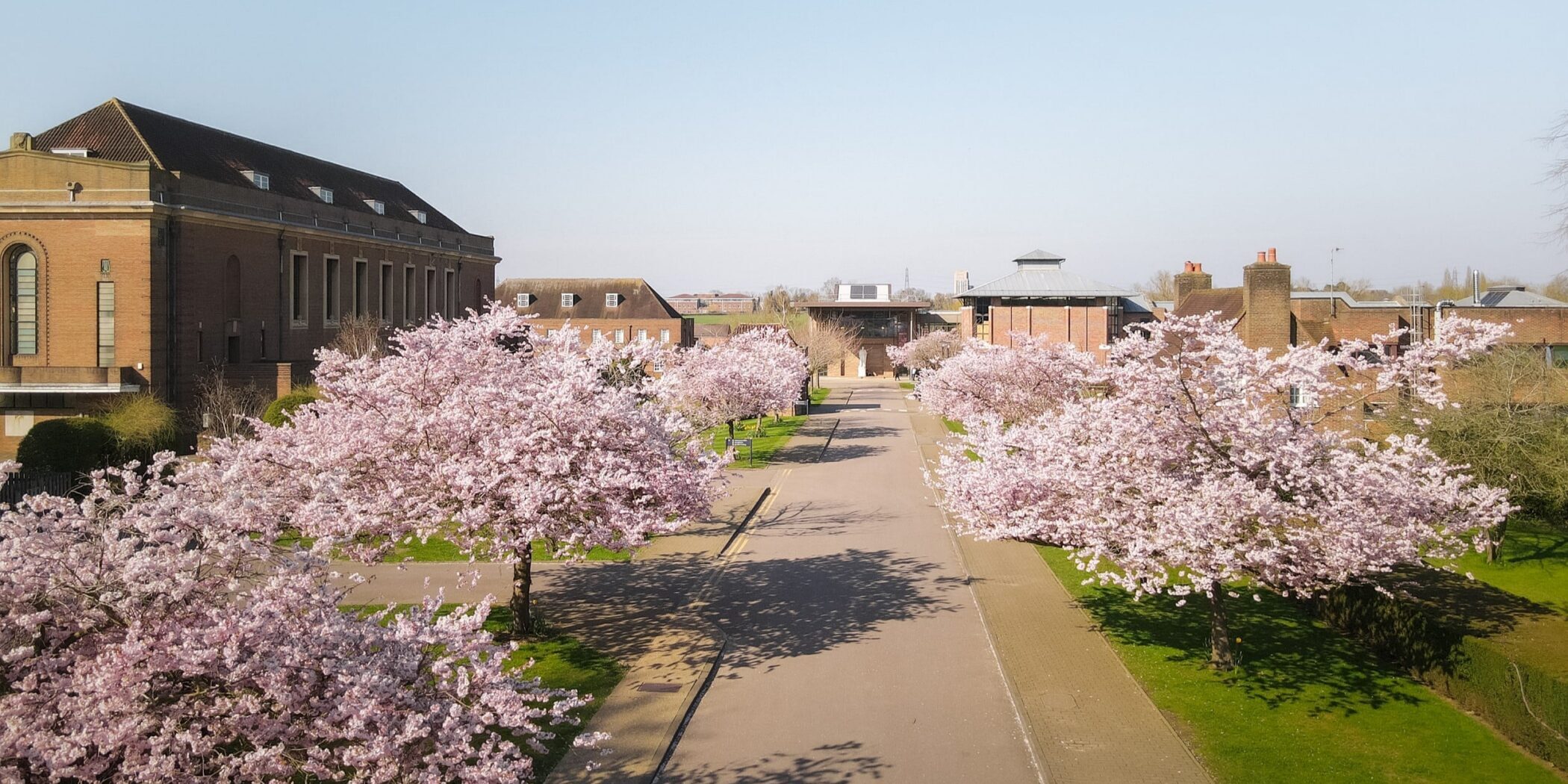
Merchant Taylors’ is a selective boys’ day school on a 280-acre campus near Moor Park. Year 7 selection combines three written papers, a short online assessment, a school reference and an interview for shortlisted boys. The General Paper gives creativity and flexible thinking a place alongside English and maths.
At a glance
- School
- Independent · boys · day
- Entry covered
- Year 7 · September 2027
- Apply by
- 31 October 2026
- Main assessment
- 28 November 2026
- Written papers
- English, maths & General · 45 minutes each
- Online test
- Maths 20 minutes · verbal reasoning 10 minutes
- Termly total
- £11,075 · 2026–27 · VAT and lunch included
- Bursaries
- Means-tested · up to full fees
Contacts & visiting
- Admissions
- admissions@mtsn.org.uk
- Admissions telephone
- 01923 845514
- School office
- 01923 820644
- Fee enquiries
- accounts@mtsn.org.uk
School address
Sandy Lodge, Northwood, Middlesex HA6 2HT- Getting there
- Moor Park station on the Metropolitan line is about ten minutes’ walk from the school buildings. The school’s directions use the path beside the railway, Askew Road and the Long Drive. Allow extra time to reach the room named in the invitation.
- Parking
- Follow the parking and entrance instructions supplied for your visit or assessment; ask admissions about visitor parking when booking. The senior school and Prep Nursery share this site; Merchant Taylors’ Prep is on a separate site about half a mile away.
The next advertised Open Day is 8 May 2027, after the September 2027 admissions decisions. Individual tours led by a Sixth Form Monitor are available during term: contact admissions if you need to visit before applying.
Inspection report
- Inspectorate
- Independent Schools Inspectorate
- Inspection
- 29 April–1 May 2025
- Outcome
- All standards met
Inspectors praised the ambitious curriculum, care for pupils and a culture of kindness and mutual respect. Their recommended next step was for teachers to consider individual pupils’ needs consistently when planning lessons.
Who can apply?
- Boys applying for Year 7. The June 2026 policy normally expects applicants to be 11 by 1 September of entry year; younger entry is exceptional and ordinarily no younger than 10 years 6 months. Discuss any unusual age or school-year position with admissions.
- Disclose disability, SEND or a specific learning difficulty on the application so the school can discuss reasonable adjustments. The access-arrangements sitting is 30 November 2026.
- The school requests a current-school reference. If one is unavailable, the policy says this will not prejudice the application and asks parents for a recent school report.
- No residential catchment entitlement is specified. Plan a sustainable school-day journey before applying.
Siblings and Merchant Taylors’ Prep transfer
A sibling or recent family connection can receive preference where assessment performances are relatively similar. Every applicant still needs to meet the entry requirements; a sibling does not have an automatic place.
Merchant Taylors’ Prep has a separate ongoing assessment and transfer process, with outcomes communicated in Year 5. Its arrangements and deposit transfers should not be confused with external 11+ entry.
Dates & deadlines
All dates and times are UK time.
- Apply through the school
Registration, bursary & scholarship deadline
Complete all relevant applications; the bursary policy asks for the completed form before 31 October.
Main entrance assessment
Three written papers and a short online test at the school.
Access arrangements / reserve sitting
Attend this date only if allocated by admissions.
Academic scholarship assessment week
By invitation after the entrance assessments.
Practical scholarship assessments
Offers emailed
Acceptance deadline
Interviews take place in January–February 2027 by invitation. Offer holders are invited to an event in late February. Use your individual invitation for the date and arrival time.
How selection works
Register and request support · by 31 October
Complete the registration form and pay £180. Apply separately for a bursary or one practical scholarship if relevant; provide any access-arrangement information promptly.
Written papers and online test · 28 or 30 November
Attend the sitting assigned by the school. The three written papers are 45 minutes each; the online assessment has 20 minutes of maths and 10 minutes of verbal reasoning.
Reference and interview · January–February
The school obtains a reference and invites shortlisted boys for a 20-minute interview. Strong entrance-test performance may also lead to an academic scholarship assessment.
Offer and acceptance · February–March
Offers arrive on 12 February. Bursary outcomes accompany place decisions. Accept by 3 March and pay the deposit and administration fee specified in the offer.
Intake, competition and selection decisions
The school considers the assessments, interview and reference together. It does not publish a fixed pass mark or comparable applicant, offer and accepted-place totals for the current admissions round. The published figures therefore do not show an individual applicant’s chance of admission.
Ask admissions for the planned external Year 7 intake if this affects your decision. The school’s total pupil capacity and the number of offers are different measures from the number of new Year 7 places.
Exam format
Written English
28 November 2026 · allocated access/reserve sitting 30 November
School paper · written answers
- Subjects
- Reading comprehension and a choice of writing tasks
- Time
- 45 minutes · current admissions page
The sample’s suggested split totals 50 minutes; follow the live 45-minute instructions and bring the writing equipment requested.
English preparationWritten mathematics
Same assessment sitting
School paper · written working
- Subjects
- Number, geometry, data and multi-step problem solving
- Time
- 45 minutes · current admissions page
Practise written calculation. Check the invitation for permitted equipment, including the calculator rule.
Maths preparationGeneral Paper
Same assessment sitting
School-specific written paper
- Subjects
- Thinking, problem solving and creativity
- Time
- 45 minutes
No current specimen is published. Follow the paper’s instructions and the invitation’s equipment list.
General Paper preparationOnline assessment
As part of the entrance assessment sitting
Quest Admissions · school-linked familiarisation
- Subjects
- Mathematics and verbal reasoning
- Time
- 20 minutes maths + 10 minutes verbal reasoning
Try the official taster to learn the screen controls. Follow the invitation’s rules for rough work and equipment.
Online test preparationInterview
January–February 2027 · shortlisted candidates
Individual conversation
- Focus
- Interests, aspirations, academic curiosity and reasoning
- Time
- 20 minutes
Bring any item or material only if the school requests it.
Interview preparationMerchant Taylors’ papers
Start with the English paper and its separate reading booklet, plus the current maths specimen. The library contains eight maths records: the unnumbered specimen is the same question set as the current school-linked maths PDF; the other seven provide additional practice.
Current English specimen · The Explorer
40 marks · reading 20 + writing 20Download both files. The specimen suggests 5 minutes reading, 20 minutes comprehension and 25 minutes writing; the admissions page specifies 45 minutes overall.
Current mathematics specimen
23 numbered questions · 75 marks across the questionsNo duration is printed in this booklet. The current admissions page specifies 45 minutes. This duplicates the library’s unnumbered Maths Specimen Paper.
Online familiarisation
Live test: maths 20 minutes · verbal reasoning 10 minutesUse the school-linked Quest taster to practise navigating the assessment. A taster score is not an admission threshold.
All papers on Elevenfold
View the collectionMerchant Taylors' · Maths Specimen Paper
45 minutes · current admissions page
Same 23-question set as the current official maths specimen; 75 marks across questions. No timing or equipment rule is printed.
Merchant Taylors' · Maths Specimen Paper 1
60 minutes · printed historical format
Historical practice format; 25 numbered questions and 100 marks. Printed cover: undated; 60 minutes.
Merchant Taylors' · Maths Specimen Paper 2
60 minutes · printed historical format
Historical practice format; 30 numbered questions and 100 marks. Printed cover: undated; 60 minutes. Q6(a) prints km although the distance table is in miles; treat 194 as a table lookup.
Merchant Taylors' · Maths Specimen Paper 3
60 minutes · printed historical format
Historical practice format; 36 numbered questions and 100 marks. Printed cover: undated; 60 minutes.
Merchant Taylors' · Maths Specimen Paper 4
60 minutes · printed historical format
Historical practice format; 35 numbered questions and 100 marks. Printed cover: undated; 60 minutes.
Merchant Taylors' · Maths Specimen Paper 5
60 minutes · printed historical format
Historical practice format; 31 numbered questions and 80 marks. Printed cover: undated; 60 minutes.
Merchant Taylors' · Maths Specimen Paper 6
60 minutes · printed historical format
Historical practice format; 31 numbered questions and 74 marks. Printed cover: undated; 60 minutes.
Merchant Taylors' · 2021 Maths Entrance Paper
60 minutes · printed historical format
Historical practice format; 28 numbered questions and 100 marks. Printed cover: January 2021; 1 hour.
Read the printed cover before timing an older paper
Read the printed cover before timing an older paper
| Library record | Printed format | How to use it |
|---|---|---|
| 2021 Entrance Paper | January 2021 · 1 hour · 28 questions | Historical paper; use it for topic practice and explaining methods. |
| Specimen Paper | Undated · 23 questions · 75 marks in total | Same questions as the current school-linked maths specimen. |
| Specimens 1 and 2 | Undated · 1 hour · 25 / 30 questions | Each has 100 marks across its questions. |
| Specimens 3 and 4 | Undated · 60 minutes · 100 marks | 36 / 35 numbered questions. |
| Specimens 5 and 6 | Undated · 60 minutes · 80 / 74 marks | 31 questions each. |
Do not use a 60-minute historical paper to infer today’s timing. Dates mentioned inside questions, such as a grandmother’s age in 2006, do not establish when the paper was set.
More English practice · historical papers
January 2021 · Refugee Boy
60 minutes · reading 30 marks + writing 30 marksIncludes the passage, six reading questions and three writing choices. The city-street image task asks for description of a single moment.
Undated Practice Paper 1 · Northern Lights
60 minutes · reading 40 marks + writing 40 marksNine reading questions; continuation, magazine article, personal account or letter. Historical formats and genres.
Undated Practice Paper 2 · Tunnels
60 minutes · reading 40 marks + writing 40 marksNine reading questions and four writing choices. Q8 includes an editorial marking instruction; this is not a clean current specimen or a full answer key.
These copies are hosted by the SHLC archive. Use the dates and timings printed inside each paper. They provide extra reading and writing practice; the current specimen above is the starting point for today’s format.
English: read closely and explain
The current specimen uses Katherine Rundell’s The Explorer: Fred is in a small plane over Brazil when the pilot becomes unwell. The reading section has three substantial responses rather than a long list of multiple-choice questions.
English: read closely and explain
| Task in the specimen | What to practise | Parent check |
|---|---|---|
| Q1 · 4 marks · other passengers | Select relevant details from the specified lines and express them in your own words. Keep each passenger distinct. | Can your child give several accurate details without copying whole sentences? |
| Q2 · 8 marks · Fred’s changing feelings | Track the whole extract: his interest in flying, the uncomfortable cabin and his growing concern as the flight changes. Link each inference to an action or detail. | Does the answer explain a change over time, rather than list unrelated feelings? |
| Q3 · 8 marks · the plane in trouble | Choose short quotations about the pilot, sounds, movement and sentence length. Explain how each makes the moment alarming. | Does every quotation have an explanation of its particular effect? |
For Q3, naming a technique is only a starting point. Explain what the chosen word or sentence makes the reader notice, imagine or feel. For an own-words task, keep the meaning while changing the phrasing.
What the older English papers add
What the older English papers add
| Paper | Additional reading practice |
|---|---|
| January 2021 · Refugee Boy | Put events in order; describe a busy room in your own words; explain changing feelings; interpret a character’s appearance; choose a new vivid quotation without reusing one. |
| Practice Paper 1 · Northern Lights | Follow a fast-moving rescue; distinguish what a simile depicts from how it makes the reader feel; explain shock and confusion using short quotations. |
| Practice Paper 2 · Tunnels | Track curiosity becoming fear; explain figurative language; choose several different moments that build a threatening atmosphere. |
These skills transfer to an unseen passage. They do not establish the text or question list for a future paper.
Vocabulary from the reading papers
Say the meaning in context before revealing it. The first nine words come from the current Explorer passage; the others come from the historical papers below. The old vocabulary questions test “tumult”, “laboriously” and “repugnance” directly.
Writing: choose the right kind of response
Writing is worth 20 of the current specimen’s 40 marks. Choose one task and follow its form: a continuation, an exciting journey description or a description of the rainforest image.
Writing: choose the right kind of response
| Choice | How to prepare | Check before finishing |
|---|---|---|
| Continue the story | Keep the established characters, viewpoint and tense. Plan a small sequence immediately after the extract and a clear stopping point. The paper explicitly says not to cover too many events or repeat the passage. | Does the continuation fit the tense atmosphere and move the scene forward? |
| Describe setting off on an exciting journey | Choose a particular place and moment of departure. Build atmosphere through selected sounds, movement, light and the observer’s reactions. The journey need not involve a plane. | Can a reader picture this departure, rather than read a summary of the whole trip? |
| Describe the image | Stay within the pictured moment: a stream, rocks, dense vegetation, tall trunks and misty light. Move the reader’s attention deliberately through the scene. | Have you described the scene without turning it into a story? |
The instructions require full sentences, paragraphs, planning and checking, and award marks for spelling and punctuation. A useful home routine is to plan briefly, write a manageable piece, then check sentence endings, tense, paragraph breaks and any uncertain spellings.
A 45-minute home practice split
Until the school confirms the sample timing discrepancy, a practical home rehearsal is 5 minutes to read, 18 minutes for comprehension and 22 minutes for writing, including planning and checking. This is an Elevenfold practice suggestion, not the school’s prescribed split.
Broaden the writing practice with older tasks
The January 2021 paper pairs its continuation with a first sight of an unfamiliar place and a city-street image description. The two undated practice papers also include a school-magazine article and a letter to a friend. Practise matching audience, purpose and form when using those tasks; the current specimen offers the three choices described above.
Broaden the writing practice with older tasks
| Transferable habit | What to do |
|---|---|
| A clear viewpoint | Choose whose eyes the reader sees through and keep that perspective consistent. |
| A shaped response | Select a few connected details or events and choose a stopping point before writing. |
| Purposeful language | Use a precise verb or image because it fits the scene, then explain the effect when reviewing. |
| Sentence control | Vary sentence length where it supports pace or emphasis; check punctuation and paragraph changes. |
Maths: what to practise
The current specimen moves from short calculations to linked problems about shapes, costs, averages, counting and a turning robot. Show enough working for another person to follow your method, including units and a short explanation where requested.
- Current written test
- 45 minutes
- Current sample
- 23 numbered questions
- Sample question marks
- 75 in total
- Separate online maths
- 20 minutes
Use the topic links below for focused practice, then return to the cited school question. The older papers broaden the examples; they do not predict the next examination.
Fractions, decimals and percentages
Convert between forms, compare fractions using a common denominator and calculate with mixed numbers. In a word problem, establish which total a fraction or percentage belongs to before combining amounts.
Check the method: Can your child explain why every fraction in the calculation refers to the same whole?
Order of operations and signed numbers
Place brackets carefully, keep squares attached to their bases, and use the order of operations. For temperature differences, cross zero deliberately; for a midpoint, add the two values and halve the total.
Check the method: Can your child show the intermediate values and check the direction of a temperature change?
Tables, graphs and averages
Use both row and column headings in a table. Distinguish a value from its frequency; recover a total with mean × number of observations. The current football-frequency question asks how an unknown frequency changes the mode, median and mean.
Check the method: Can your child explain why the middle observation is not always the middle row of a frequency table?
Area, perimeter and cutting shapes
Use perpendicular height for triangle area. Split a compound shape into rectangles or subtract missing regions. A cut can leave half the area while creating a new boundary, so half a shape need not have half its original perimeter.
Check the method: Can your child trace every outside edge and explain which new edge the cut creates?
Angles, reflection and coordinates
Use 180° in a triangle and 360° in a quadrilateral, plus straight-line and vertically opposite angles. Reflect each vertex by its perpendicular distance from the mirror line; the current sample uses a diagonal mirror.
Check the method: Can your child state the angle fact used and check that the reflected shape keeps its size?
Ratio, cost and a changing total
Write a short relationship for each condition. The trophy-and-ribbon problem fixes both the number of items and the cost; the rugby problem asks for a fraction of the final match total. Keep pounds and pence consistent in profit questions.
Check the method: Does the proposed answer satisfy every condition, including the total number of items?
Factors, multiples and number constraints
Use factor pairs or prime factors to find common divisors, then apply the remaining restrictions. For shared cycles, use a common multiple; for identical groups using everything, look for a common factor.
Check the method: Can your child explain why a common factor and a common multiple solve different problems?
Probability and systematic counting
Count equally likely outcomes and avoid double-counting. Make an ordered list or table for combinations. When order does not matter, two selections made in the opposite order represent the same outcome. For digit-counting questions, organise by place value.
Check the method: Can your child explain how the list is complete and why no case has been counted twice?
Sequences, cycles and unfamiliar operations
Tabulate steps when rules change. The current robot turns through increasing angles, so track the cumulative turn and allow full rotations. Older papers define new mathematical symbols: translate the rule into ordinary operations before applying it backwards.
Check the method: Can your child distinguish the turn on this move from the total turn since the start?
Time, measurement and fitting objects
Convert units before calculating and distinguish elapsed time from a clock display. When packing stamps or cubes, count how many fit along each dimension, then decide whether a partly used sheet or container must be rounded up.
Check the method: Can your child explain the unit on the answer and whether the final quantity must be a whole number?
A productive way to review a paper
- Begin with a short untimed attempt so you can distinguish a missing method from a timing problem.
- Ask your child to explain one successful solution and one corrected mistake. Check units, the requested form of the answer and all conditions.
- Practise one or two weak skills, then retry a related school question a few days later.
- Use the current 45-minute format for a final rehearsal. Keep a 60-minute older booklet labelled as historical practice.
Notes for the older practice papers
Notes for the older practice papers
| Paper | Issue | Practical response |
|---|---|---|
| Specimen 2 · Q6(a) | The distance table says miles, but the question calls the 194 entry kilometres. | Identify the place from the table; do not invent a conversion. |
| Specimen 4 · Q4(b) | The instruction names p–t, but the answer line also includes u. | Check the diagram and account for every labelled angle. |
| Specimen 6 · Q20 | The digit list repeats 1 and permits reuse. | Count different three-digit numbers, not two distinguishable copies of the digit 1. |
These are observations about the printed practice files, not corrections issued by the school. Specimens 5 and 6 have 80 and 74 marks respectively.
The General Paper
The school describes this 45-minute paper as a test of thinking, problem solving and creativity. It does not publish a current specimen, so a commercial “General Paper” cannot be assumed to reproduce the live assessment.
The General Paper
| Practice habit | A useful family activity |
|---|---|
| Explain a choice | Discuss a decision in a book or a real-life situation. Give a reason, consider a different view and revise the answer if new information matters. |
| Work with unfamiliar rules | Try a short logic puzzle or a new board game. Restate the rules, test a small case and explain why the answer fits. |
| Develop an idea | Generate several possible uses, solutions or explanations, then choose one and make it practical. |
| Read every instruction | Notice limits, required evidence and the form of the answer before beginning. |
These activities develop transferable habits; they are not predictions of examination questions.
Historical General Paper · 2021 Time Travellers
A third-party archive preserves a General Paper labelled 2021, with a one-hour cover and three 20-mark sections: learning a made-up language from examples, logic puzzles and ethical decisions. It illustrates the habit of applying unfamiliar rules and explaining choices. It is an old paper; the current school publishes no General specimen and specifies 45 minutes.
The online maths & verbal reasoning test
Use the school’s own Quest familiarisation link first. The current test is 20 minutes of maths and 10 minutes of verbal reasoning, in addition to the three written papers.
- Try the taster on a computer so the screen, answer selection and navigation feel familiar.
- For maths, practise accurate short calculations and reading exactly what an answer must represent.
- For verbal reasoning, build vocabulary through reading and practise explaining relationships between words. Read unfamiliar instructions carefully before choosing an answer.
- Use commercial practice as additional exercise; its scores and suggested targets are not school pass marks.
A manageable preparation plan
With the main exam on 28 November, focus on learning from a small number of careful attempts. Keep reading and short conversations part of ordinary family life.
Start with the current materials
Print both English files, try the current maths specimen in sections and open the online taster. Note unfamiliar instructions as well as weak topics.
Work on two priorities at a time
Alternate a short maths session with reading or writing. Use the topic links, then return to a school question to see whether the method transfers.
Review the explanation
For maths, ask why each step works. For reading, connect a detail or short quotation with a precise inference. For writing, revise one paragraph for clarity and control.
Rehearse the current timings
Try 45-minute written sessions once the skills are secure, preserving time to check. Follow the school’s invitation on the day; the English sample’s suggested split is inconsistent with the published live duration.
Prepare for the visit and conversation
Check route, arrival instructions and equipment; keep sleep and normal interests steady. Practise discussing a book, activity or problem without learning a script.
Interview preparation
Shortlisted boys have a 20-minute interview in January–February. The school wants to explore aspirations, interests, hobbies and academic passions. Its policy also mentions communication, intellectual curiosity and reasoning, and says discussion may follow strengths or weaknesses seen in the assessments.
Interview preparation
| Prepare | A useful practice conversation |
|---|---|
| A real interest | Explain what you have been doing, one thing you have learned and what you want to explore next. |
| A book or idea | Discuss a detail you found interesting and support your view with reasons. |
| Thinking aloud | When given an unfamiliar problem, state what you know, try an approach and explain a change of mind. |
| School life | Choose an opportunity at Taylors’ that interests you and explain why you would take part. |
| Listening | Answer the question actually asked; ask for clarification when needed. |
Keep conversations short and natural. Memorised speeches make it harder to respond to a follow-up question.
Fees & additional costs
- Total per term
- £11,075 · 2026–27
- Tuition before VAT
- £8,939 per term
- VAT shown by school
- £1,788 per term
- Compulsory lunch
- £348 per term
The published termly total includes tuition, VAT and lunch. Three terms at this rate come to £33,225; this is a calculation from the 2026–27 rate, not a quote for 2027–28.
Registration, deposit and extras
Registration, deposit and extras
| Charge | Published amount / basis |
|---|---|
| Registration | £180 including VAT · non-refundable |
| Acceptance deposit | £3,000 including VAT · set against final account under the admissions policy |
| Acceptance administration fee | £60 including VAT · non-refundable |
| Coach service | £2,475 per year · confirm route and applicable charges |
| Instrumental lessons | £320 per term for ten 40-minute lessons; instrument hire £30 per term; exam fees additional |
| Year 7 Lake District trip | Around £400, exclusive of applicable taxes |
| Other costs | Uniform and some activities/trips cost extra; stationery, textbooks and lifetime alumni membership are included. |
The £3,000 deposit is not refunded if you withdraw after accepting a place. Cancellation requires a full term’s written notice, or payment of fees in lieu of notice.
The school offers termly direct debit or nine monthly payments from September to May. Ask accounts for the applicable schedule and the VAT treatment of individual extras.
Bursaries & help with fees
Means-tested bursaries can cover up to 100% of tuition fees and reasonable school-related expenditure. The school says some awards also help with uniform, coaches and other costs. A bursary and a scholarship can be held together.
Register, then contact admissions
Email admissions@mtsn.org.uk for the confidential means-testing application. The published 2027 deadline is 31 October; the policy asks for the completed bursary form before that date.
Provide financial evidence
Bursary Administration Limited independently reviews applications and arranges an interview, which may be a home visit, video call or telephone call.
Complete the normal admissions process
Bursary applicants take the same assessments. Awards consider financial need, performance and potential; applications exceed available funds.
Read the award and review terms
The bursary outcome arrives with the offer. Awards are regularly means-tested and can rise or fall with family circumstances.
Continuing support and hardship applications
Awards depend on satisfactory progress, conduct and compliance with school terms. The October 2026 policy says families refused an entrance bursary cannot reapply for a hardship bursary within the first two years of admission. Confirm affordability before accepting an unfunded place.
Academic & practical scholarships
Academic & practical scholarships
| Award | Application and benefit |
|---|---|
| Academic | Strong entrance-test candidates are invited to assessment in the week beginning 18 January 2027. The June 2026 policy provides for awards up to 50% of tuition fees plus an enrichment programme. |
| Art, drama, design/engineering/technology or sport | Apply after registration by 31 October. The assessment day is 29 January 2027. Support is provided through the relevant department’s materials, training and programme. |
| Music | Apply by 31 October. The policy describes four awards across 11+ and 16+: up to 25%, 15%, 10% and 10%, with free tuition on two instruments or instrument and voice. Additional free-tuition awards may be available. |
Candidates may apply for only one practical scholarship from art, drama, design/engineering/technology, music and sport. Academic awards are considered through the entrance process. Awards depend on meeting the academic entry standard; scholarships can be supplemented by a means-tested bursary.
Music: what the school looks for
The policy emphasises exceptional promise, achievement and a lasting passion for music. It particularly welcomes orchestral instruments; single-study pianists are expected to be exceptional performers. Families may arrange a discussion with the Director of Music before applying. Follow the individual audition instructions for repertoire and materials.
Examination results
- 2026 GCSE · grades 9–7
- 90.2%
- 2026 GCSE · grades 9–8
- 72.9%
- 2026 A level · A*–A
- 75.6%
- 2026 A level · A*–B
- 94.2%
These are percentages of examination grades, not percentages of pupils or entry-test pass rates. The school reports 45.9% grade 9 at GCSE and 44.9% A* at A level.
Life at Taylors’
The 280-acre site supports a broad academic and co-curricular programme: music, drama, art and design, sport, clubs, outdoor education, CCF and the Duke of Edinburgh’s Award. A visit is a useful chance to see how an ordinary school day balances lessons, activities and travel.
Life at Taylors’
| On a visit | What to find out |
|---|---|
| The first year | Ask how boys settle into Year 7, build friendships and receive help when a subject feels difficult. |
| Activities | Look at the actual weekly timetable for the activities your son wants to try. |
| Pastoral care | Meet or ask about the tutor and House systems, coaching, counselling and learning support. |
| The journey home | Check the compatibility of clubs, fixtures and coach departure times with your route. |
Other entry points
The normal senior-school entry points are Year 7 and Year 12. The admissions policy allows exceptional entry at other stages by arrangement; it does not promise a routine 13+ route. Sixth Form applicants have subject assessments, interviews and a school reference.
Other schools to compare
Selective boys’ day school in Elstree; compare its admissions stages and coach routes.
A different journey into southwest London; check its own entry route, timings and costs.
Compare the whole school day, financial support and your child’s interests as well as examination results.
Dates and fees were checked on 25 October 2026. Use the school’s individual invitation for arrival arrangements, equipment and any agreed access arrangements.