Independent school · Edgbaston, Birmingham
King Edward VI High School for Girls
KEHS sets written English and maths papers. For September 2027 entry, selected interviews take place in November and results are posted on 11 December.
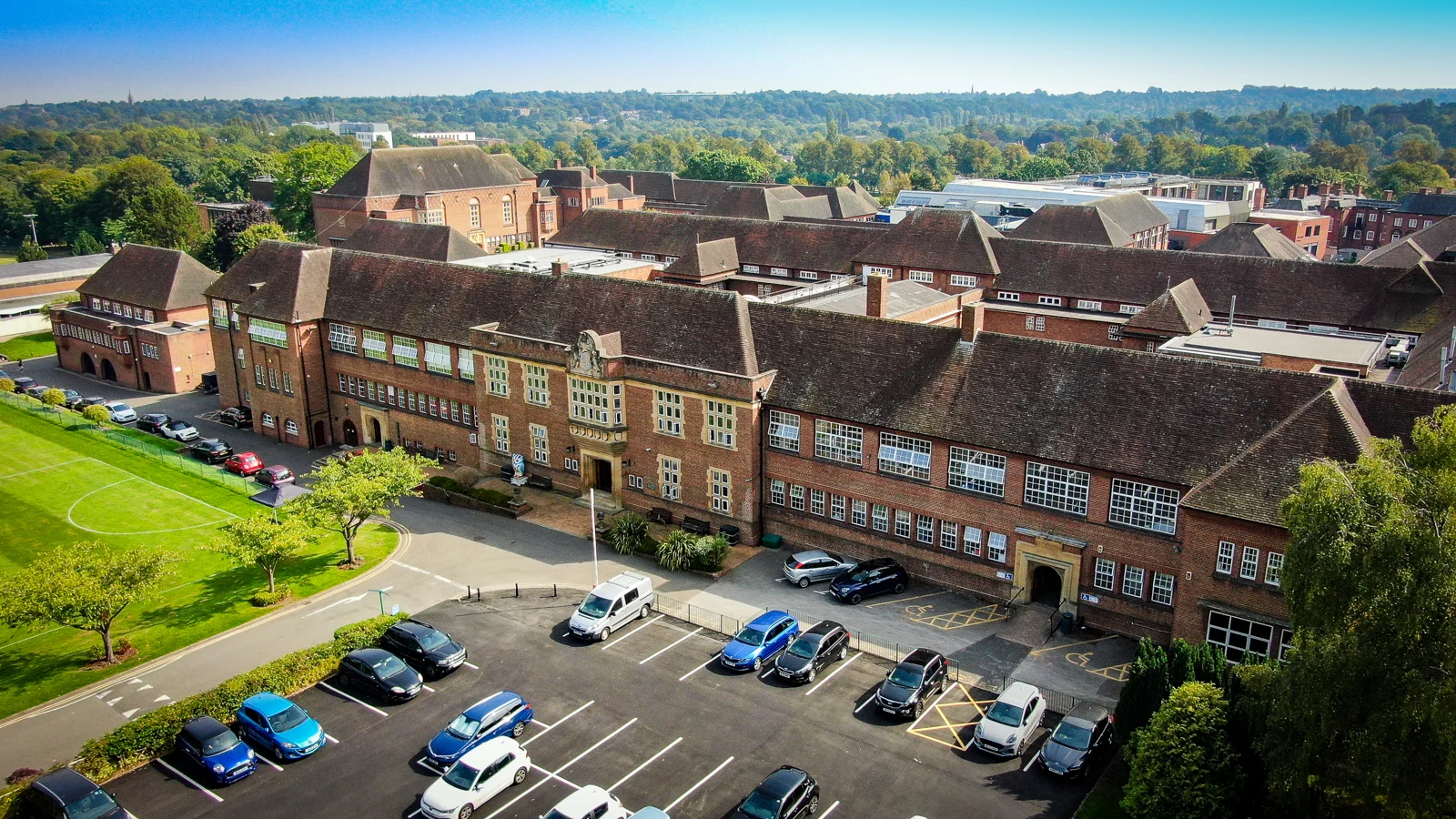
The main examination has taken place. November interviews are by invitation, and are not required for every offer.
KEHS sets its own written English and maths papers. Clear explanations and visible working help staff assess how a candidate thinks.
For September 2027 applicants, the next steps are selected interviews in November and results posted on 11 December. For future applicants, start with the three official specimen files below.
At a glance
- School
- Girls’ independent day schoolEdgbaston, Birmingham · ages 11–18
- 2027 applications
- Main window closedEntrance exam held on 2 October 2026
- Next decision
- 11 December 2026Results sent by post; November interviews by invitation
- Tuition
- £7,512 per term2026/27, including VAT; Year 7 lunch is extra
- Entrance tests
- English and mathsWritten answers; no calculator, multiple choice or negative marking
- Financial support
- Assisted PlacesMeans-tested fee support; academic and music scholarships also available
Admissions contacts & visiting
- Admissions
- admissions@kehs.org.ukLate applications, visits, access arrangements and entry questions.
- Admissions telephone
- 0121 415 2195
- School reception
- 0121 472 1834
School address
Edgbaston Park Road, Birmingham B15 2UB- Getting there
- University railway station is less than a ten-minute walk through the university campus, according to the school. Bristol Road buses 61 and 63 connect with the city centre.
- Parking
- Morning drop-off uses the main car park from Edgbaston Park Road. Normal afternoon collection uses the KES Parade Ground via Park Vale Drive, B5 7SP. Arrange visitor parking with admissions.
Gates, collection times and school buses
Gates, collection times and school buses
| Journey | Practical detail |
|---|---|
| Walking | Use the pedestrian gate by the Design Centre on Edgbaston Park Road, or the Bristol Road gate by KES Sports Centre. The KEHS main drive and Park Vale gate are vehicle-only. |
| Afternoon collection | Park Vale opens at 3.45pm Monday–Thursday and 4pm Friday. Do not wait in front of the Foundation Office or on Edgbaston Park Road. |
| Friday arrangements | Year 7 normally finishes at 3.20pm, before the published car gate opening. Confirm supervised waiting or an alternative collection plan with the school. |
| After activities | The main KEHS car park can be used after 5pm Monday–Thursday and 4.20pm Friday. |
| School services | The public 1S serves Solihull, Acocks Green and Moseley. Walsall provision is through Tripable; Zeelo advertises Hagley/Stourbridge and Solihull routes. Check current stops, availability and prices with the operator. |
Inspection: what the reports say
- Last full inspection
- 3–5 October 2023Independent Schools Inspectorate: all listed Standards met
- Latest focused inspection
- 30 April 2026Material-change inspection of a proposed increase in whole-school capacity
The 2023 report describes challenging teaching supported by sensitive pastoral care. Its recommended next step was more consistent monitoring of teaching across departments, so independent thinking was encouraged throughout the school.
The 2026 visit recommended approval of an increase in maximum pupil numbers from 700 to 750. It was a focused safety and capacity review, not a new full academic inspection or a statement of Year 7 places.
Who can apply?
Who can apply?
| Requirement | What it means for your family |
|---|---|
| Age for September 2027 | Normally born from 1 September 2015 to 31 August 2016. |
| Catchment | No admission catchment and no preference for local homes or particular primary schools. A workable daily journey still matters. |
| Residence and immigration | Applicants must live locally with their family and have the right to live and study in the UK. KEHS does not sponsor Child Student visas. |
| Siblings | A sibling must meet the usual entrance requirements. Admission is not automatic. |
| Assisted Place funding | A separate regional schooling or home-education condition applies. See the funding section before assuming that no catchment means unrestricted bursary eligibility. |
Learning needs and exam adjustments
Upload supporting documents with the application. For 2027 entry, the published SEND consideration deadline was 9 September 2026 at 9am. Discuss needs with admissions early, including an assessment or diagnosis still in progress.
Evidence can include an educational psychologist’s report from the past three years, medical or NHS referral documents and the current school’s account of normal assessment arrangements. A panel reviews requests; extra time is not automatic.
Dates & deadlines for September 2027 entry
All dates and times are UK time.
Applications opened
The normal application window is now closed.
SEND consideration deadline
Supporting evidence was required with the application.
Registration closed
Contact admissions about late applications before paying.
Entrance examination
English and maths; the main sitting has taken place.
Interviews and music auditions
Not every successful candidate is interviewed.
Results posted
Letters identify the offer, funding or reserve-list outcome. This is the posting date, not a guaranteed delivery date.
The acceptance deadline is in March 2027; the precise date is still to be confirmed. Use the deadline in your offer letter. September 2028 application dates have not yet been published.
How selection works
Register · closed 21 September 2026 at noon
Complete the school’s application, upload a photograph and pay £60 including VAT unless the fee is waived. Indicate interest in an Assisted Place and music scholarship. KEHS is independent: this is separate from Birmingham’s state grammar-school application.
School reference and exams · 2 October 2026
KEHS requests an academic and personal report from the current school. Candidates sit the school’s written English and maths papers; staff consider the working and reasoning as well as final answers.
Selected interviews and auditions · November 2026
Invitations may concern a scholarship, financial support, home education, a difference between paper results or an issue in the reference. Music applicants may audition. An interview is not required for every offer.
Decision · letters posted 11 December 2026
The letter explains whether a place, scholarship, Assisted Place or reserve-list position is offered. KEHS does not issue a grammar-school-style numerical result.
Accept · March 2027, exact deadline to follow
Read the offer and contract, return the acceptance form and pay the £400 deposit if required. Check funding, travel and withdrawal costs before accepting. Decline unwanted offers promptly so the reserve list can move.
Places, offers and the reserve list
A current, matched total of 11+ applicants and offers is not published in the official guidance. There is no reliable acceptance percentage to apply to an individual child. Whole-school capacity and the number eventually joining are different figures.
Reserve-list offers may follow the March acceptance deadline or become available later. For an Assisted Place applicant below the funding cut-off, KEHS may discuss a full-fee offer with the family and Bursar; that does not mean funding has been awarded.
The examination at a glance
English
Main 2027-entry sitting: 2 October 2026
One written paper, set and marked by KEHS
- Subjects
- Reading and writing. Previous tasks have used poetry, prose and pictures, including comprehension, creative writing and personal responses.
- Time
- Paper duration is not stated in the current public guidance.
No multiple choice or negative marking. Give developed answers and follow each task’s wording.
English preparationMathematics
Same examination day
One written paper, set and marked by KEHS
- Subjects
- Arithmetic and problem-solving, including unfamiliar ideas explained within the question.
- Time
- The specimen is a short question sheet, not a full timed paper.
No calculator. Formal algebra and geometry are not prerequisites. Show working: the method matters.
Maths preparationWhat to take and when to collect
The school asks candidates to arrive by 9.30am, wear comfortable clothes rather than school uniform, and bring a packed lunch. Staff and Year 10 pupils supervise the day.
Published finish times differ: the exam page says around 2.30pm; the FAQ says 2.45–3pm. Follow the candidate’s personal invitation for collection and equipment instructions.
KEHS papers
Start with the poetry specimen and maths question sheet if both are unseen. Save the longer prose extract for a later check. Keep vocabulary and teaching notes closed until your child finishes.
- Start with English poetry
One-page poem and seven numbered questions. No official time limit or mark scheme is supplied.
- Start with maths questions
Three challenge problems on one page. Use them to discuss methods, not to calculate a timed mock score.
English · prose passage and questions
No published time limitNine numbered questions and a two-page whale-rider extract. Read the passage on PDF pages 2–3 before answering page 1. Question 9 has an inaccurate line reference: locate the quoted words instead.
The complete KEHS collection on Elevenfold is below. Its maths sheet contains the same questions as the school’s current download; it is an alternative copy, not another unseen paper.
All papers on Elevenfold
View the collectionMaths specimen questions · undated
Three unnumbered challenge blocks, not a full timed paper. Same questions as the school download; no official answers or mark allocation supplied.
Which tasks are in the published sheets?
Which tasks are in the published sheets?
| Resource | Coverage | Use it for |
|---|---|---|
| Maths specimen | Multiplication patterns; stamp-value combinations; a clock problem linking two times. | Explaining a method, keeping track of conditions and checking an answer. |
| Poetry specimen · A donkey | Appearance, changing mood, sound imagery, an interpretation of the setting and a personal choice of animal. | Explaining what a comparison makes the reader imagine or hear. |
| Prose specimen · whale-rider extract | Setting, mood, figurative language, supported inference, the whale’s power and events in the narrative. | Following a rich, unfamiliar passage and giving reasons from the text. |
These are undated specimens, not a run of annual past papers. They show useful demands to practise, but cannot establish how often a topic appears or predict the next paper. The school does not supply an official answer scheme with these three files.
English: reading closely and explaining ideas
Give explanations, not labels. The specimens repeatedly ask how language creates an impression, why a view is reasonable and which details support it. Your child should be able to say more than “it is a metaphor” or “the character is happy”.
English: reading closely and explaining ideas
| Reading task | Where it appears | What a strong answer does |
|---|---|---|
| Find details and explain them | Poetry Q1–3; prose Q7 | Answers the exact question, distinguishes separate points and puts events in a clear order. |
| Explain an image or sound | Poetry Q2, Q4 and Q6; prose Q3 and Q6 | Selects a short phrase, explains the literal picture or sound and connects it to the effect. |
| Infer mood, setting or intention | Prose Q1–2, Q4–5 and Q8–9 | Uses clues from the passage; does not rely on a memorised story or outside knowledge. |
| Support an interpretation | Poetry Q5–6; prose Q4–6 | Gives a defensible view and explains the evidence. Where two phrases are requested, supplies two useful ones. |
| Make a personal choice | Poetry Q7 | Develops reasons and concrete detail rather than giving a one-line preference. |
Worked example: go beyond naming a technique
Original teaching example · explain a comparison
“The old gate coughed, then gave a long metallic groan.” How does the description help you imagine the sound?
See the approach
“Coughed” suggests a short, broken sound at first. The “long metallic groan” then suggests a low, drawn-out creak as the gate moves. Together they make the gate sound stiff and difficult to open.
“It is personification” identifies a technique but does not explain the sound. Select the words that matter, say what each suggests, then connect the idea to the gate. This is Elevenfold practice, not a school answer.
Worked example: support an inference
Original teaching example · inference with a reason
“For the third time, Nia checked the empty path. She left the porch light on and placed a second cup beside her own.” What is Nia expecting? Give two details that support your answer.
See the approach
Nia is expecting someone to arrive. Repeatedly checking the path suggests she is waiting for a visitor, and the second cup shows that she has prepared for another person.
The answer uses two distinct clues. “Her mother is coming home from hospital” adds a story the passage does not establish. A good inference is specific enough to explain the clues without inventing facts.
Writing and personal responses
The school’s guidance includes creative writing and responses to pictures or other material. The two published English sheets do not provide a timed full writing paper. Practise a focused scene or developed response rather than memorising an essay.
Writing and personal responses
| Home practice | What to ask | What to check |
|---|---|---|
| A ten-minute description | Describe one place as its mood changes. Choose three details to develop. | Precise nouns and verbs; a clear viewpoint; sentences that make sense. |
| A short personal response | Choose a subject, then explain two different reasons it interests you. | Specific detail and a developed explanation of each reason. |
| A revision pass | Read the answer aloud and improve one vague phrase. | Full stops, sentence boundaries, tense and spelling before decorative vocabulary. |
Original teaching example · a personal response
Choose an everyday object that would make an interesting subject for a poem. Explain two features you would develop.
See the approach
I would choose a battered suitcase. Its scuffed corners could suggest all the journeys it has survived, while its stiff catch might seem to guard stories that it refuses to release. I would contrast its ordinary appearance with the adventures it could contain.
A reasoned choice gives the writer something to explore. “I like suitcases because they are useful” offers little detail. This exercise practises a supported personal response; it is not a prediction of the next writing task.
Vocabulary
For an unfamiliar word in the test, first check the surrounding sentence: is it describing a sound, movement, feeling or appearance? A sensible explanation that fits the passage is more useful than an impressive but inaccurate synonym.
Maths: choose what to teach next
Multiply large numbers accurately
Break a multiplication into place-value steps and keep zeros aligned. The first specimen block builds from small products to much larger ones.
Check the method: Ask your child to estimate the number of digits before calculating. Then check using a different grouping.
Specimen block 1
Extend and justify a numerical pattern
Compare the factors as well as the products. Explain what changes from one line to the next before predicting a new line.
Check the method: A correct next answer is not enough: can your child show why the factor pattern gives it?
Specimen block 1
Find whole-number combinations
List stamp choices systematically, subtract their value and test the remainder. Repeated stamps are allowed.
Check the method: Check that each value is permitted and the sum is exact. If starting with the largest stamp fails, try another combination.
Specimen block 2
Compare two times on one timeline
Separate “minutes past” from “minutes before” and mark the gap between the two observations. Translate “four times as many” before calculating.
Check the method: Substitute the proposed clock time back into every part of the sentence. Reversing which amount is multiplied gives a plausible but wrong result.
Specimen block 3
Use equal parts to solve an unfamiliar problem
A bar or labelled timeline can replace formal algebra. Show which intervals or quantities are equal and which are multiples.
Check the method: After finding one part, return to the actual question: does it ask for a clock time, an interval or a total?
Specimen block 3
Worked model: multiplication patterns
Original teaching example · see a multiplication pattern
Calculate 9 × 11, 99 × 101 and 999 × 1001. What is 9999 × 10001? Explain a way to check it.
See the approach
99; 9,999; 999,999; then 99,999,999.
Each pair sits one below and one above 10, 100, 1,000 or 10,000. For the last product, 9999 × 10001 = 9999 × 10000 + 9999 = 99,990,000 + 9,999 = 99,999,999. The calculations explain the pattern; a guessed string of nines alone does not.
Worked model: stamp combinations
Original teaching example · organise a coin search
You have 6p, 13p and 20p stamps. Show two ways to make exactly 58p. You may repeat a value.
See the approach
20p + 20p + 6p + 6p + 6p; or 13p + 13p + 13p + 13p + 6p.
Subtract a chosen large stamp total, then check whether the remainder can be made. Two 20p stamps leave 18p, which is three 6p stamps. Four 13p stamps leave 6p. Check each complete sum; you are not asked to use every denomination or minimise the number of stamps.
Worked model: a clock comparison
Original teaching example · keep the time comparison the right way round
How many minutes before 5pm is it now if, 40 minutes ago, the number of minutes past 2pm was three times the number of minutes now remaining before 5pm?
See the approach
35 minutes before 5pm: it is 4.25pm.
From 2pm to 5pm is 180 minutes. Remove the 40-minute gap between the two observations: 140 minutes remain. Those 140 minutes consist of three equal parts after 2pm at the earlier time and one equal part before 5pm now. Each part is 140 ÷ 4 = 35. Check: 40 minutes before 4.25pm is 3.45pm, which is 105 minutes after 2pm; 105 = 3 × 35.
Keep ordinary written arithmetic secure alongside these challenges. The school says formal algebra and geometry are not required; it can still ask a child to reason through a new mathematical idea explained in the question.
Plan the next practice session
Use one unseen specimen first
Choose poetry or the maths sheet. Ask for an independent attempt without a stopwatch: neither file specifies a full-paper time limit. Keep the prose extract for a fresh reading check.
Identify one precise difficulty
Is the child missing a clue, naming a technique without explaining it, misreading a time comparison or abandoning a systematic search? Choose one issue for the next lesson.
Teach it, then change the example
Use one of the worked examples, cover the explanation, then change the numbers, image or evidence. The child should explain the new answer without repeating the model from memory.
Check independence on another day
Return to a fresh example and ask for a complete explanation. Use timed home tasks only as practice routines; do not label an arbitrary specimen score as the KEHS pass mark.
Interviews: what an invitation means
Interviews: what an invitation means
| Reason for an interview | What to prepare |
|---|---|
| Scholarship consideration | Be ready to discuss an interest, explain a thought process and respond to a new question. There is no separate academic scholarship paper. |
| Assisted Place consideration | The child’s interview and the parents’ financial discussion serve different purposes. Have financial evidence ready when requested. |
| Different results across the two papers | Practise explaining a method or revisiting an answer calmly, including what the child would change. |
| Home education or further information | Be ready to discuss learning, interests and the circumstances the school needs to understand. |
A short practice conversation
Ask your child to describe a book or interest, explain one unfamiliar problem aloud and respond to a follow-up such as “What makes you think that?” Allow thinking time. Prepared speeches are less useful than clear reasons.
KEHS does not publish a fixed 11+ interview duration or a bank of past questions. The prompts here are home practice, not reported interview questions.
Fees and the cost of accepting a place
- Annual tuition
- £22,536Three terms at 2026/27 rates, including VAT
- Year 7 lunch
- £4.75 per school dayCompulsory; billed termly in addition to tuition
- Before starting
- £60 registration + £400 depositWaivers and full Assisted Place exceptions may apply
Fees and the cost of accepting a place
| Charge | Amount or rule | What to budget for |
|---|---|---|
| Tuition | £7,512 per term | Includes books, stationery, materials, personal accident cover, public exams except resits, and compulsory curriculum day trips. |
| Registration | £60 including VAT | Non-refundable. Waived with proof of Universal Credit, Income Support or Job Seeker’s Allowance; Tax Credits alone do not qualify on the application page. |
| Acceptance deposit | £400 | Full Assisted Place families do not pay it. It is not the maximum cost of cancelling an accepted place. |
| Additional costs | Variable | Lunch, private music lessons, residential trips, uniform and travel. Ask for current charges before accepting. |
| Three-child discount | 25% off the eldest child’s fees | Requires three children simultaneously paying full fees at KEHS or neighbouring KES. It is not a general two-sibling discount. |
Deposit refunds and cancellation rules
Deposit refunds and cancellation rules
| Situation | Consequence under the current contract |
|---|---|
| Your child leaves after attending | For Year 7 entrants from autumn 2024, request the remaining deposit in writing before the end of the academic year following departure. Unclaimed balances go to the Foundation’s Assisted Places fund. |
| Offer and acceptance entirely at a distance | A qualifying 14-day cancellation right can refund the deposit and fees, adjusted for any education already provided. The contract sets the conditions. |
| Offer made within a term of starting | Unless the qualifying cancellation right applies, cancellation before entry costs the first term’s fees less the deposit. |
| An award and withdrawal without proper notice | Full-rate fees may be due, and the award conditions can also require repayment of up to three terms’ benefits. Read both documents. |
The admissions page calls the deposit non-refundable; the parent contract separately explains repayment after attendance. Check the terms enclosed with your own offer before signing.
These are 2026/27 prices, not a quote for September 2027. Fees are reviewed annually and can be paid termly or monthly by direct debit.
Assisted Places: eligibility and likely costs
An Assisted Place is means-tested help with tuition. Tick the funding box when registering. After the exam, selected families complete a financial application and meet the Fees Officer before an award is decided.
Assisted Places: eligibility and likely costs
| Check first | Current rule |
|---|---|
| Regional schooling | At least 12 months on a school roll or in formal home education in the West Midlands region at the time of application. |
| Counties covered | West Midlands, Warwickshire, Worcestershire, Herefordshire, Staffordshire and Shropshire. |
| Income and assets | The school calculates “relevant income” from household taxable income, assets and the number of dependants. The policy gives an assets guide of £550,000; salary alone does not decide eligibility. |
| Selection | Exam performance, school report, interview and available funding matter. Meeting the financial criteria does not guarantee support. |
| Annual review | Supply fresh financial evidence each year. The family contribution can change as circumstances or the scheme change. |
Selected bands from the published 2026/27 scale
| Relevant annual income | Family’s tuition share: one child | What the figure means |
|---|---|---|
| Below £28,000 | 0% | Full tuition support under the published scale; separate expense support depends on the income band and award. |
| £28,000–£33,999 | 5% | An illustration from the 2026/27 one-child scale, not a promised offer. |
| £45,000–£49,999 | 20% | The means-tested family contribution is a proportion of tuition. |
| £60,000–£64,999 | 50% | Extras are not automatically covered. |
| £77,000–£79,999 | 90% | Support reaches 10% of tuition in this band. |
| £80,000 | 100% | No grant in the one-child scale at this figure. |
Two children, extras and financial evidence
A separate two-child scale can extend support up to relevant income below £100,000. Use the table for the correct number of children; the one-child £80,000 figure is not a universal family threshold.
Free Assisted Places include Year 7 school meals under the policy. Travel and uniform grants and support for compulsory public-examination field trips may also be available. The scale distinguishes families below £25,000 from those on £25,000–£27,999 for expense support; obtain a written breakdown.
Savings, investments, property equity, business resources and financial contributions from others can affect the assessment. Expect documentary checks and, where requested, a home visit. A low taxable salary on its own does not establish entitlement.
Academic and music scholarships
Academic and music scholarships
| Award at 11+ | How consideration works | What to do |
|---|---|---|
| Academic scholarship | Automatic consideration through the entrance process; no separate application or scholarship paper. An interview may follow. | Concentrate on explaining ideas and methods rather than a separate scholarship syllabus. |
| Music scholarship | Strong entrance-exam performance and a November audition. The scholarship page says Grade 6 or above; the FAQ allows candidates working towards Grade 6. | Indicate interest on the application. Ask admissions which standard applies if Grade 6 is still in progress. |
Awards are not means-tested and there is no fixed annual number. A candidate may hold a scholarship alongside an Assisted Place. Confirm the value and continuing conditions in the offer; the website’s 5–10% music/sport statement appears in its sixth-form guidance.
Sports scholarships are described for 16+ entry, not the published 11+ route.
2026 exam results
School subject summaries updated 29 September 2026
| Qualification | Top grade | Top two grades | Wider band |
|---|---|---|---|
| GCSE · 1,020 entries | 58.63% grade 9 | 81.67% grades 9–8 | 90.98% grades 9–7 |
| A level · 298 entries | 37.92% A* | 74.83% A*–A | 91.28% A*–B |
These percentages describe examination entries, not the percentage of pupils achieving a complete set of those grades. The A-level table covers 91 Upper Sixth pupils; Additional Maths and the Extended Project are reported separately.
The school day and life in Year 7
The school day and life in Year 7
| Part of the day | Published arrangement |
|---|---|
| Registration | 8.45am each weekday. |
| Lessons | Usually 40 minutes; practical subjects often use doubles. |
| Lunch | 12.50pm on most days, 12.45pm Thursday; lunchtime activities begin at 1.10pm. |
| End of school | 4pm Monday–Thursday; normally 3.20pm Friday for Year 7. |
| Shared opportunities | KEHS and neighbouring King Edward’s School share aspects of music and other activity provision; KEHS remains a girls’ school. |
Test the journey at school-run time and plan a way home after activities. Friday’s earlier finish does not mean the normal car-collection gate opens earlier; check the arrangements above.
Other entry routes
Other entry routes
| Route | What changes |
|---|---|
| Year 8 or Year 9 | Occasional places depend on vacancies. Contact admissions before registering; the application fee is £180 including VAT. These are full-fee entry routes without entry scholarships or Assisted Places. |
| After an unsuccessful 11+ application | The normal next application is at 16+. The policy allows waiting-list candidates and rare exceptions to be considered earlier; ask admissions rather than assuming a 13+ resit is available. |
| Sixth form · September 2027 | Applications close 1 February 2027. Selection uses the application, personal statement, school reference, predicted GCSE results and interview; offers are conditional on results. |
Other schools to consider
State grammar · girls · separate West Midlands test and admissions rules
State grammar · girls · catchment and priority categories matter
Independent · boys · neighbouring school for a family comparison